
Last updated November 2, 2026
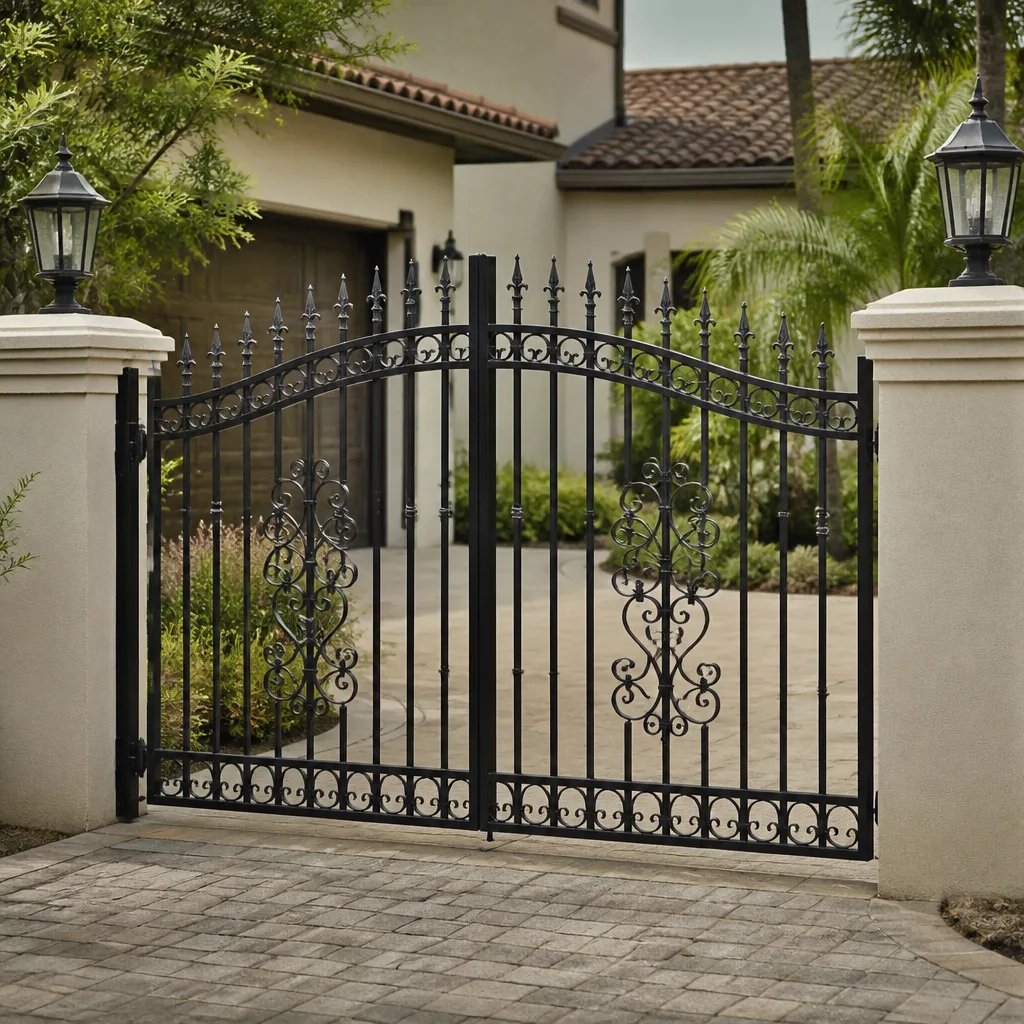 Wrought iron
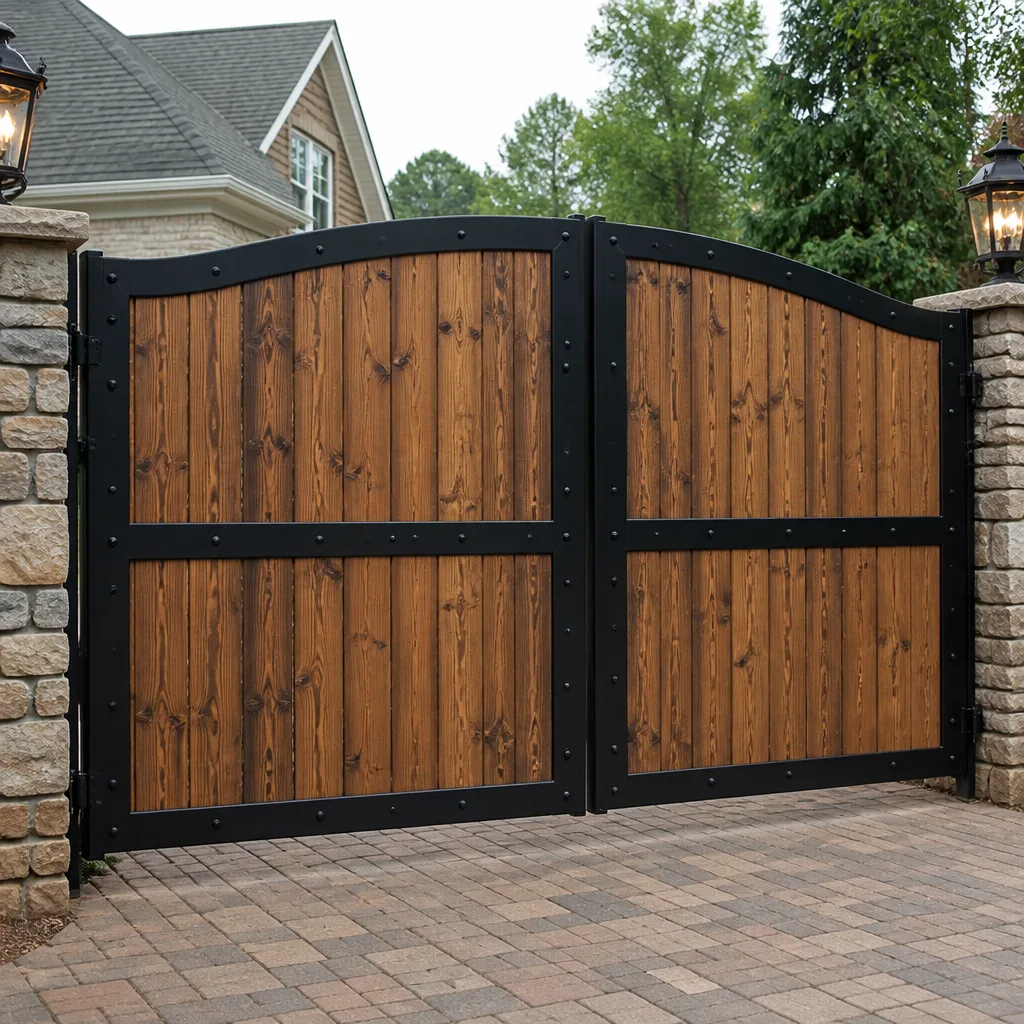 Wood & steel frame
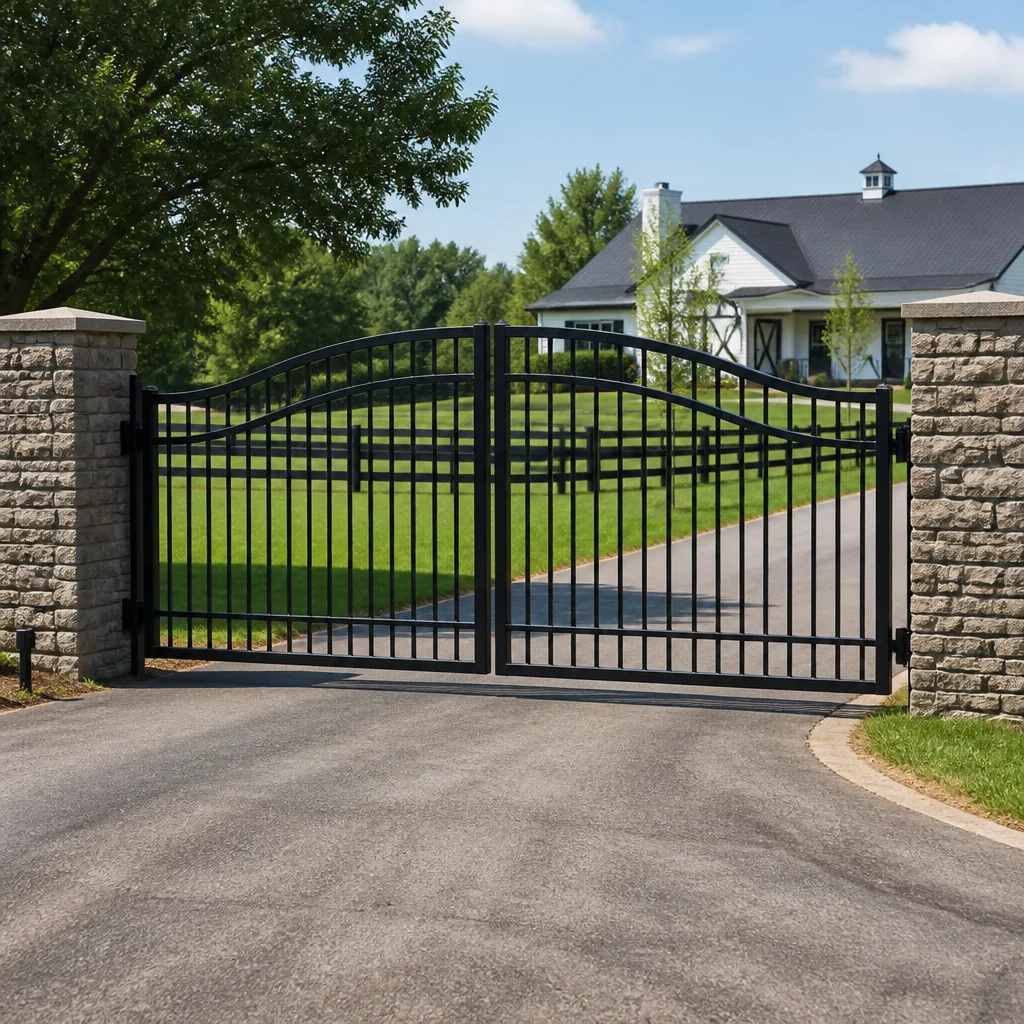 Farm & ranch
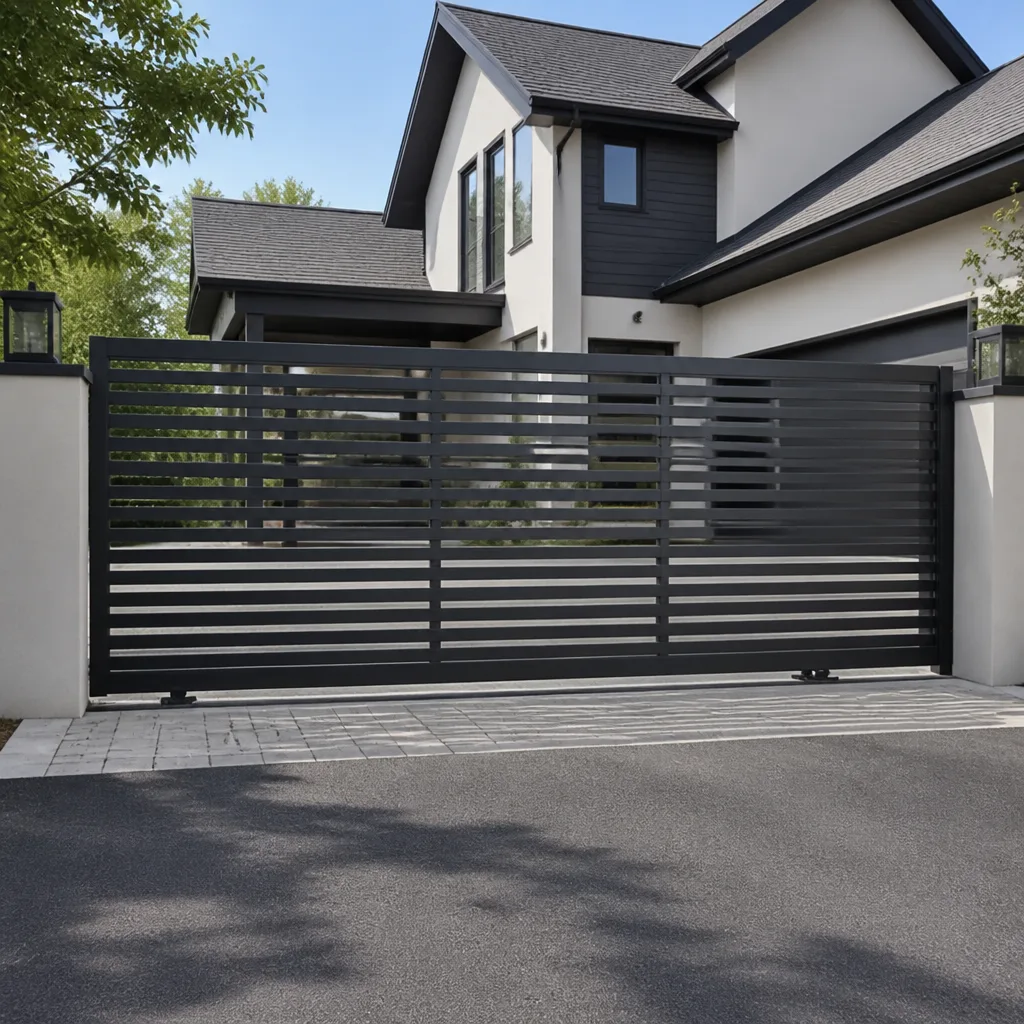 Sliding driveway gates
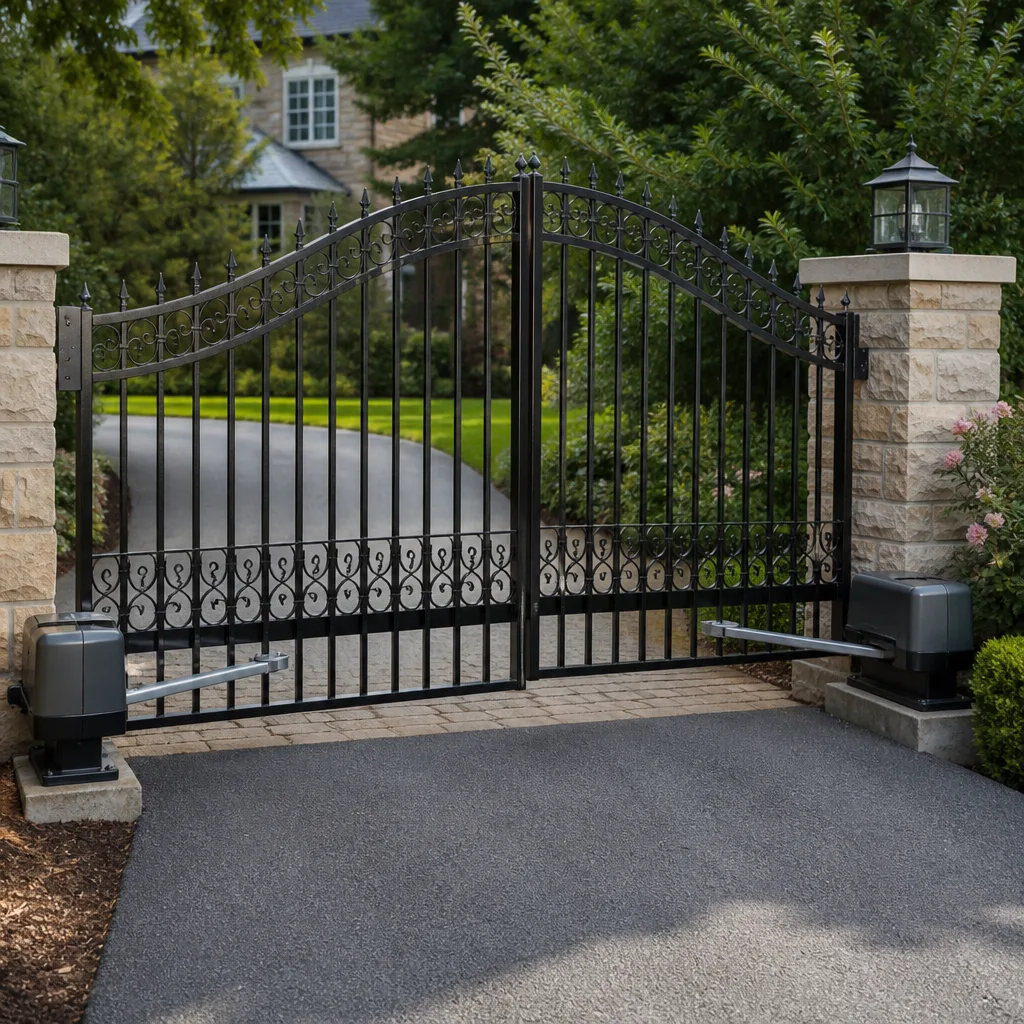 LiftMaster operators
Free on-site gate assessment - hinges, posts, and your LiftMaster or Nice gate operator checked before anything is quoted
The assessment is free and the quote is the invoice.
Get your free estimateGate Repair Cost Breakdown: The Jurupa Valley Homeowner’s Reference for 2026
The most expensive gate repair mistake in Jurupa Valley isn’t choosing the wrong contractor. It’s approving a $1,400 motor replacement when the actual failure is a $60 capacitor, because nobody walked you through what the diagnostics actually showed. Gate pricing is wildly non-linear: the same symptom, a gate that won’t open, could be a $150 limit switch or a $1,800 board-and-motor job. This guide breaks down real 2026 repair costs by root cause, how diagnostic fees work, what drives local pricing in Jurupa Valley, and the threshold where repair stops making financial sense compared to replacement. For more guidance, see our Gate Repair Maintenance Checklist for Jurupa Valley Homeowners.
Quick Answer
Gate repair in Jurupa Valley typically runs $150 to $1,800 depending on the root cause. Mechanical fixes like hinge replacement or weld repair usually land between $150 and $600, while electric gate repairs involving control boards, motors, or operators run $400 to $1,800. Most legitimate contractors charge a $50 to $125 diagnostic fee that’s typically credited toward the repair if you approve the work.
Styles & brands we work with
- Wrought iron
- Wood & steel frame
- Farm & ranch
- Sliding driveway gates
- LiftMaster operators
Table of Contents
- 2026 Repair Costs by Type: What You’ll Actually Pay
- How Diagnostic Fees Work and Why Skipping Them Costs More
- Jurupa Valley Cost Multipliers: What Drives Local Pricing Up
- Repair vs. Replace: The Threshold Calculation
- OEM vs. Aftermarket Parts: Where It Matters
- How to Compare Quotes Without Getting Burned
- Common Mistakes to Avoid
- When to Call a Professional
- Frequently Asked Questions
2026 Repair Costs by Type: What You’ll Actually Pay
Let’s get specific. These are the numbers we see across Jurupa Valley, from the Mira Loma corridor up to the hillside properties off Limonite and along Sierra Avenue. Every price assumes a legitimate contractor doing the work properly, not a handyman with a welder in the back of a pickup.
Mechanical Repairs
- Hinge replacement: $150 to $500 per hinge. A standard residential swing gate has two to four hinges. Worn hinges cause sagging, which causes the gate to drag or fail to latch. Most Jurupa Valley homes with iron or steel tube gates fall in the $200 to $350 range per hinge when you factor the grinding, welding, and alignment work.
- Weld repair: $150 to $600. This covers cracked frames, broken pickets, and separated corner joints. The price spread depends on whether the gate needs to come off its posts or can be welded in place, and whether rust remediation is needed first.
- Post reset: $500 to $1,200. When a gate post leans, the gate binds. Resetting a post means excavation, concrete work, re-plumbing the post, and re-aligning the gate. It’s not a small job, and in Jurupa Valley’s clay-heavy soil we see posts shift more than homeowners expect, especially after heavy winter rains saturate the ground.
- Track and wheel replacement: $200 to $700. Sliding gates ride on a steel track with roller wheels. When wheels wear flat or the track corrodes, the gate shudders and strains the motor. This includes parts and alignment labor.
- Chain and pulley replacement: $180 to $450. Chain-drive operators stretch and wear. If the chain snaps, the gate won’t move at all.
Electric Gate Repairs
- Control board replacement: $450 to $1,200. This is the second most common electric repair we handle. Boards fail from power surges, heat exposure, and age. DoorKing and Elite boards for commercial operators sit at the top of this range; residential LiftMaster and Mighty Mule boards sit at the bottom.
- Motor or operator replacement: $650 to $1,800. When the motor burns out, you’re paying for the part plus removal, installation, and reprogramming of travel limits and safety settings. Commercial operators like a DoorKing 9150 or a Viking X-9 will push toward $1,500 to $1,800 installed.
- Capacitor replacement: $60 to $150. This is the repair that saves you $1,200 if diagnosed correctly. A failed capacitor means the motor hums but won’t start, or starts slowly. It’s a ten-minute fix once the cover is off, but it requires someone who actually tests components rather than swapping the whole motor.
- Safety loop and detector replacement: $300 to $600. Loop detectors sense vehicles and prevent the gate from closing on a car. When they fail, the gate may reverse erratically or refuse to close. This includes cutting and sealing the pavement loop, or installing a new loop detector on the existing wire.
- Photo eye and safety edge replacement: $200 to $500. These are the safety devices that prevent the gate from closing on a person or pet. California law requires them on any automated gate serving a residence or commercial property.
- Remote, keypad, and receiver repair: $100 to $300. This covers reprogramming, replacing a receiver, or installing a new keypad. Often, the “broken” gate is actually just a failed receiver that no longer recognizes remotes.
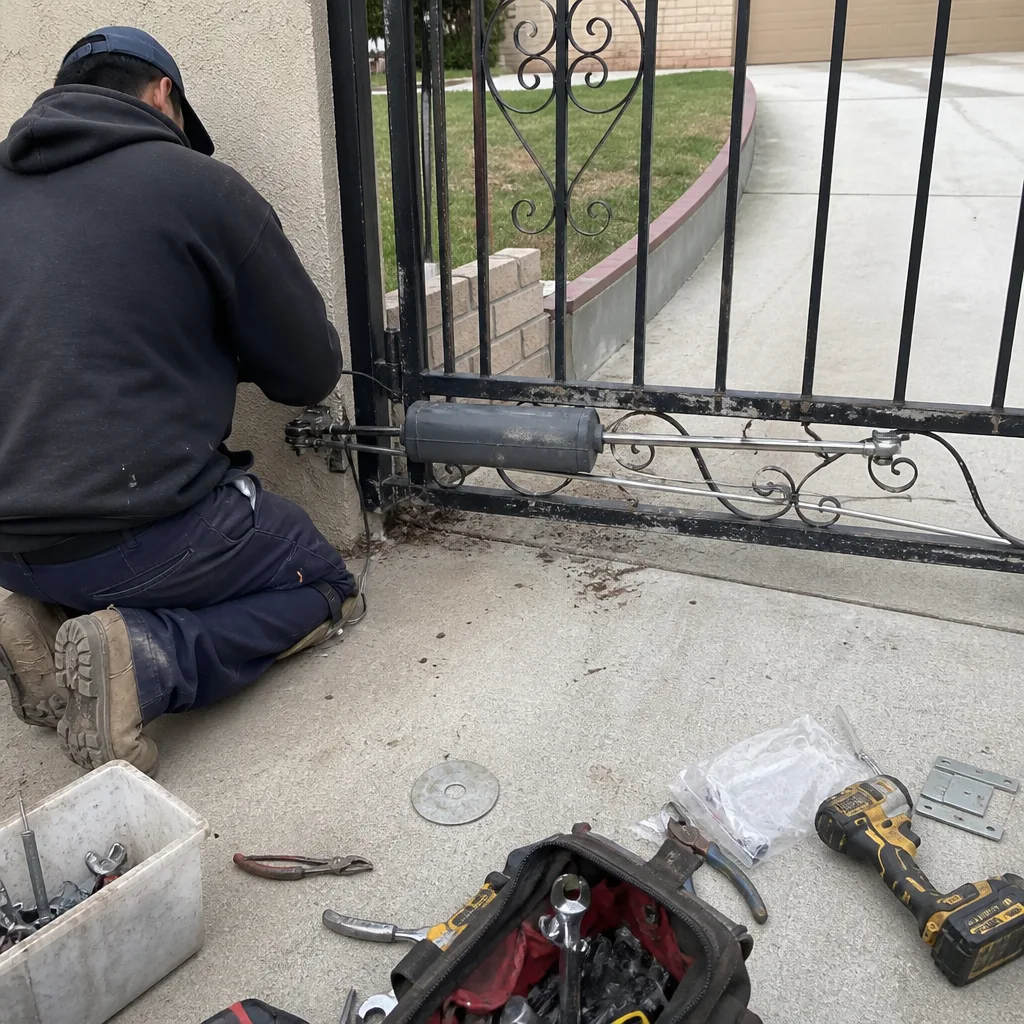
- Actuator arm replacement: $400 to $900. Swing gates on residential properties often use linear actuators, especially Mighty Mule and Ghost Controls systems. Actuators wear out faster than gear-driven operators, and in Jurupa Valley’s summer heat we see failure rates climb on arm-style systems that sit in full sun exposure.
For a deeper look at the electric side of repairs, see our full guide on Electric Gate Repair in Jurupa Valley.
How Diagnostic Fees Work and Why Skipping Them Costs More
Here’s how a legitimate diagnostic process works, step by step:
- Visual inspection of the gate, hinges, posts, wheels, and operator. We’re looking for physical wear, misalignment, rust, and damage.
- Mechanical test with the operator disengaged. This tells us whether the gate moves freely by hand. If it doesn’t, the problem is mechanical, not electrical, and no amount of motor work will fix it.
- Electrical testing of the operator: incoming voltage, capacitor condition, board output, safety device function, and remote signal. This is where the capacitor-versus-motor distinction gets made.
- Root-cause explanation in plain language, with a written quote for the exact repair, not a range guess.
Most established gate contractors in Jurupa Valley charge $50 to $125 for diagnostics, and credit that fee toward the repair if you approve the work same-visit. That’s the model you want. Contractors who skip diagnostics entirely and quote “motor replacement” over the phone are guessing. And in our experience, a guess on an electric gate is wrong about half the time.
A diagnostic fee is not a markup trick. It pays for the technician’s time to test properly. What you should refuse to accept is a diagnostic that takes five minutes and ends with a vague “needs a new motor” without any meter readings or mechanical checks. A real diagnostic on a gate system takes 30 to 60 minutes when done right.
Jurupa Valley Cost Multipliers: What Drives Local Pricing Up
Gate repair pricing is not consistent nationwide. The same hinge replacement that runs $200 flat in an industrial park in Fontana might run $375 on a hillside property in the Jurupa Hills area. Here’s what moves the needle locally.
Hillside Access and Grade
Jurupa Valley has a significant number of properties built into the Jurupa Hills and along the Santa Ana River bluff edges. Gates on these properties are often mounted on slopes, which means:
- The gate and posts are under constant gravitational load, causing faster hinge and post wear.
- Technicians need ladder work, shoring, or additional manpower to safely remove and re-hang a gate on an incline.
- Driveway approaches can be tight, limiting truck access for welding rigs or equipment.
Expect a 15% to 25% premium on hillside gate work in Jurupa Valley compared to flat-lot properties along the river corridor.
Commercial-Grade Components
Jurupa Valley has a high concentration of commercial and industrial properties: warehouse districts along Van Buren, the Mira Loma commercial corridors, and equestrian properties throughout the valley. Commercial operators from DoorKing, FAAC, BFT, and Viking use heavier-duty components than residential Mighty Mule or Ghost Controls systems. When a commercial operator fails, the repair cost is simply higher because:
- A commercial control board runs $400 to $900 for the part alone, versus $150 to $350 for residential.
- Commercial gates are larger and heavier, requiring additional labor time for any mechanical work.
- Safety compliance on commercial gates serving multi-tenant properties requires photo eyes, safety edges, and sometimes monitored loop systems, which adds inspection and calibration time.
We work on all of it. If you need the full landscape of what electric repair involves, see our main Gate Repair in Jurupa Valley page.
Rates
Most gate companies in this region charge a premium for after-hours response. A gate stuck open at 11 p.m. on a property with vehicles or equipment inside is a legitimate emergency – see our Gate Repair Emergency Preparedness Guide for Jurupa Valley Homes – but understand what you’re paying for. On holiday weekends, that premium rises. If your gate is closed and locked, and security isn’t immediately compromised, waiting until the next business morning saves you that entire surcharge.
Repair vs. Replace: The Threshold Calculation
There’s a number where repair stops making sense. Here’s the formula we use when a Jurupa Valley customer asks us whether to repair or replace a gate.
Take the operator’s age. Electric gate operators have a reliable service life of 8 to 15 years depending on brand and duty cycle. Residential operators from Mighty Mule or Ghost Controls typically last 8 to 12 years. Commercial-grade DoorKing, FAAC, and BFT operators frequently run 12 to 15 years or longer with maintenance.
Now look at the repair estimate. If the repair cost exceeds 50% of the cost of a new, fully installed system, and the existing operator is past 70% of its expected service life, replacement is the financially rational move. Here’s why: you’re about to pour money into an aging platform where the next major failure, a board, an actuator, a gearbox, is statistically likely within 18 to 24 months.
Example: a 13-year-old DoorKing slide gate operator on a commercial property in Mira Loma needs a new motor at $1,500. A new DoorKing 9150 installed runs approximately $3,800 to $4,500 depending on accessories. The repair is about 35% to 40% of replacement cost. If the board or gearbox goes next year, you’ll be at $2,500 to $3,000 into a 14-year-old operator. That’s the point where replacement wins.
Conversely, a four-year-old LiftMaster residential operator needing a $250 board repair? Repair it. You have 8 to 11 years of expected life remaining. Spending $250 to restore that operator is a clear win.
The threshold also depends on the gate itself. A rusted-through steel gate with a bowed frame and multiple broken welds is a candidate for full Gate Installation in Jurupa Valley. A structurally sound gate with a failed component is almost always worth repairing. The gate and the operator are separate decisions.
OEM vs. Aftermarket Parts: Where It Matters
Not all replacement parts are created equal, and this is where a lot of Jurupa Valley homeowners get misled. Let’s break down the landscape honestly.
OEM parts, made by the original manufacturer, cost 30% to 100% more than aftermarket equivalents. A genuine DoorKing control board runs $450 to $700 depending on model. An aftermarket “compatible” board might run $250 to $400. Sound like a deal? Sometimes it is, sometimes it isn’t.
Where aftermarket is usually fine: mechanical components like hinges, wheels, rollers, chains, and even safety edges. These are commodity items where metallurgy and basic function are well understood. A quality aftermarket hinge at $45 will perform essentially identically to an OEM hinge at $90.
Where OEM is non-negotiable: control boards, gearboxes, and motors on commercial-grade operators. DoorKing, FAAC, BFT, and Viking build their systems to tight integration between board logic, motor characteristics, and safety features. Aftermarket boards frequently have subtle timing differences that cause gate slamming, improper speed curves, or failure to communicate correctly with loop detectors and safety edges. On a commercial gate serving vehicle traffic, that’s a liability issue, not just a performance issue.
For residential systems like Mighty Mule and Ghost Controls, OEM parts are so affordable and widely available that there’s rarely a reason to go aftermarket. A Mighty Mule control board is $150 to $250 OEM. The aftermarket savings of $50 aren’t worth the compatibility risk.
Warranty on the part follows the same logic. OEM boards come with one to two years of manufacturer warranty when installed by a qualified tech. Aftermarket boards often carry 90 days, and the manufacturer will not cover a board installed inside a competitor’s operator, ever. If a contractor proposes aftermarket and you’re unsure, ask them to put it in writing that the aftermarket part carries an equivalent warranty to OEM. Watch how fast the conversation changes.
How to Compare Quotes Without Getting Burned
When you get three quotes for gate repair in Jurupa Valley, they won’t line up line-by-line, and comparing them is more difficult than it should be. Here’s how to do it properly.
- Require a line-item breakdown. A quote that says “gate repair: $850” tells you nothing. You want: parts, labor hours, labor rate, diagnostic fee, and any disposal or trip charges. Contractors who won’t line-item a quote are hiding margin they haven’t earned.
- Ask what specific part is being replaced and what brand it is. “New board” is not an answer. “DoorKing 9150 main control board, OEM, part # X” is an answer. The specificity tells you the contractor has actually diagnosed the problem and knows the system.
- Confirm the quote is fixed, not an estimate. An estimate can legally be off by 10% to 20%. A written quote should be firm. If a contractor won’t commit to a fixed price on a diagnosed repair, walk away.
- Check whether labor is included in the “part” price. Some contractors mark up parts 50% and then charge full labor on top. Others price parts at cost and charge honest labor. Comparing total price is what matters, not the parts-to-labor ratio.
- Verify what happens if the repair doesn’t fix the problem. A confident specialist stands behind their diagnosis. If we replace a board and the gate still fails because the real problem was a wiring fault we missed, that’s on us to make right, not on you to pay a second bill.
And the most important rule: the price you approve is the price you pay, agreed in writing before any work starts. No surprises. If a contractor can’t commit to that, you’re dealing with someone who bills on vibes, not on work.
Common Mistakes to Avoid
- Approving a motor replacement without seeing diagnostic readings. A failed capacitor mimics a dead motor. If the tech didn’t test the capacitor, the quote is a guess. Ask to see the meter reading or have the diagnosis explained in specific terms.
- Ignoring gate sag for months until the post cracks. Sagging gates stress hinges and posts. What starts as a $250 hinge replacement becomes a $1,200 post reset when the post finally gives out. In Jurupa Valley’s expansive clay soil, this is one of the most expensive deferred repairs we see.
- Choosing the cheapest quote without checking brand familiarity. A generalist handyman quoting $90 to “fix” a DoorKing commercial operator usually doesn’t have the diagnostic tools or parts access to do the job. You’ll pay twice: once to the handyman, and once to the specialist who actually fixes it.
- Buying parts online and hiring someone to install them. If you buy an aftermarket board online and it fails, the contractor warranty is meaningless. You own the part. You pay for the second repair. OEM parts purchased through a qualified contractor carry manufacturer warranty.
- Skipping the safety edge check after any board or motor replacement. On a swing gate, a miscalibrated motor or board can close with enough force to injure someone or damage a car. Every repair that touches the operator should include verification of all safety devices under load.
- Not asking whether the contractor handles both mechanical and electric. Many gate issues are compound: a hinge problem that strained the motor, or a board failure that was actually caused by a short in the actuator wiring. A contractor who only does mechanical work will fix the hinge and leave you with a gate that still won’t open properly.
- Delaying repair on a gate that’s making new noises. Grinding, clicking, humming, and slamming are early warning systems. Every month you ignore it, the repair bill climbs. A $60 capacitor replacement becomes a $900 motor job when the failed capacitor is ignored long enough to overheat and seize the motor.
When to Call a Professional
Call a gate specialist, not a generalist, when: the gate won’t open from any remote or keypad; the operator hums but the gate doesn’t move; the gate reverses direction mid-travel for no reason; you hear grinding or clicking from the motor housing; the gate slams shut instead of decelerating; or the gate has come off a hinge or post. Any electrical symptom involving the motor, board, loop detector, or safety devices is a job for someone who works on your brand of operator. Mechanical failures on large gates are also risky for DIY: a 400-pound sliding gate under tension can cause serious injury if a cable or spring lets go while you’re working on it. We work on LiftMaster, DoorKing, Elite, Mighty Mule, and the other major brands in the field. Gate Repair Jurupa Valley offers free estimates throughout Jurupa Valley. Call (866) 383-9857 and we’ll tell you honestly what the gate needs, and what it doesn’t.
Frequently Asked Questions
Gate repair in Jurupa Valley typically runs $150 to $1,800. Mechanical work like hinge replacement or weld repair lands between $150 and $600, while electric repairs involving motors, boards, or actuators run $400 to $1,800. The final number depends on your gate’s brand, age, and the specific component that failed. Call (866) 383-9857 for a free estimate.
A humming gate that won’t move usually points to a failed capacitor in the motor circuit, a stripped gear, or a jammed drive mechanism. The capacitor is the cheapest fix at $60 to $150, and it’s the most common cause we see on residential swing gates. A legitimate diagnostic will test the capacitor before recommending motor replacement.
For most mechanical repairs and common electric faults, yes, same-day repair is typically available in Jurupa Valley. We carry common OEM parts for LiftMaster, DoorKing, Elite, Mighty Mule, and other major brands on the truck as part of our Gate Repair services. Rare or commercial-specific parts may require a 24 to 48 hour order window.
A full gate installation includes removal and disposal of the old gate if needed, posts and footings, the gate itself, hinges, the operator suited to the gate’s weight and duty cycle, safety devices required by California code, and programming of all remotes and keypads. We provide a written fixed-price quote before any work begins. See our Gate Installation in Jurupa Valley page for more detail.
It depends on the repair cost versus replacement cost. If the repair exceeds 50% of a new installed system and the operator is more than 12 to 15 years old, replacement usually makes more long-term sense. A 15-year-old gate with a failed board might get you another two years, but the next major failure could be around the corner.
Yes. We service residential and commercial gate systems throughout Jurupa Valley, including DoorKing, FAAC, BFT, Viking, and Elite operators. Commercial gates often require different diagnostic procedures and parts, and we carry or can source OEM parts for all nine brands we service.
The Bottom Line
Gate repair pricing in Jurupa Valley is driven by root cause, not symptom. A gate that won’t open could be a $60 capacitor, a $450 board, or a $1,500 motor. The only way to know is a proper diagnostic that separates mechanical from electrical, tests components rather than guessing, and ends in a fixed written quote you approve before work starts. Don’t pay for a motor when the problem is a capacitor. Don’t replace a gate when a hinge replacement solves it. And don’t hire someone who can’t tell the difference. Call (866) 383-9857 for a free estimate, and we’ll diagnose what’s actually wrong.
Written by the team at Gate Repair Jurupa Valley, serving Jurupa Valley since 2015. Explore more guides & resources.
See the difference
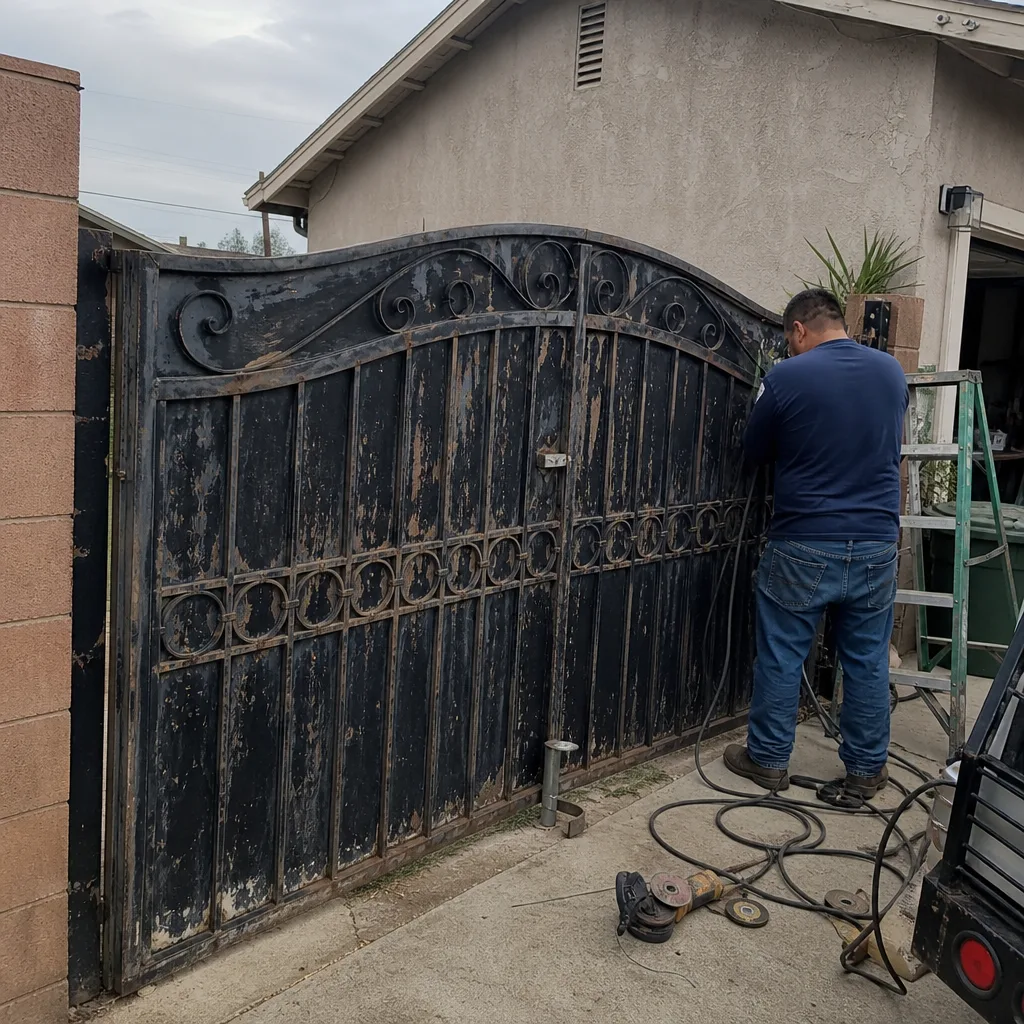 Before
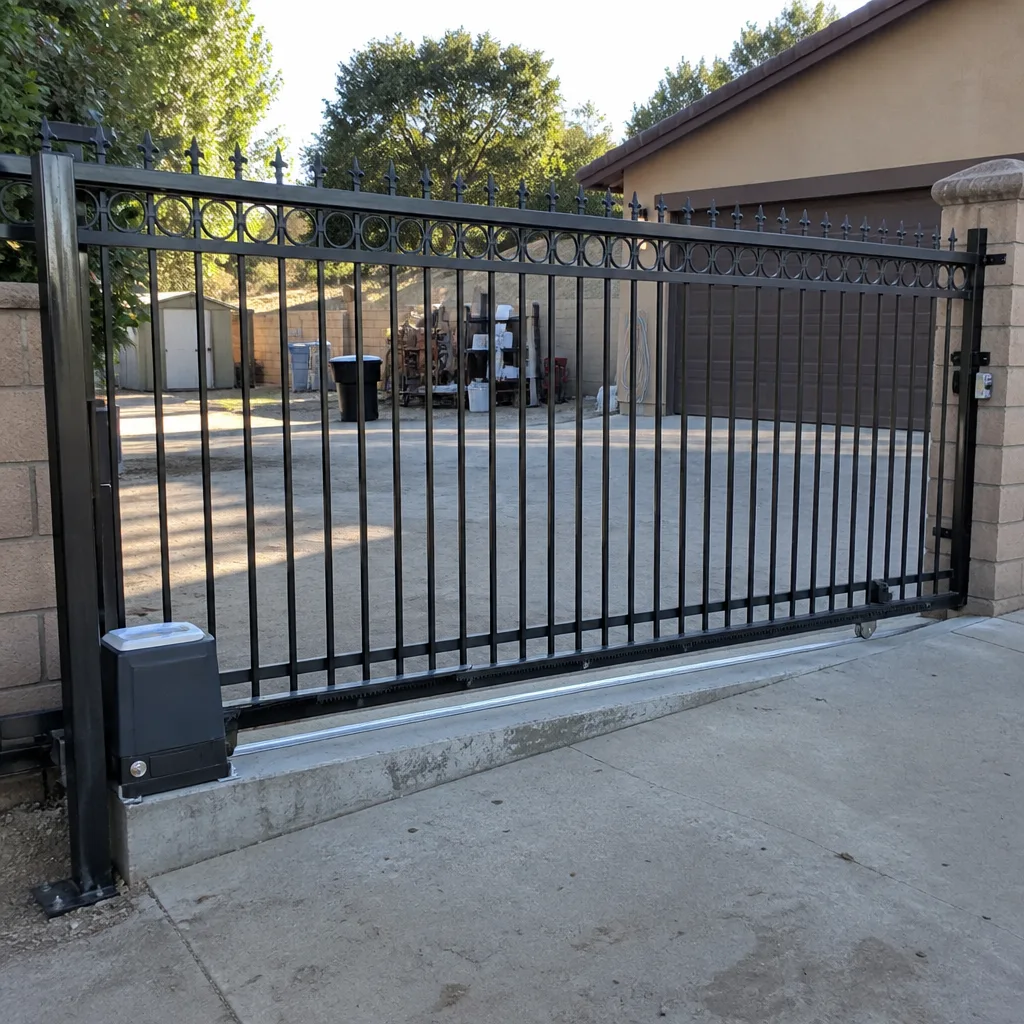 After
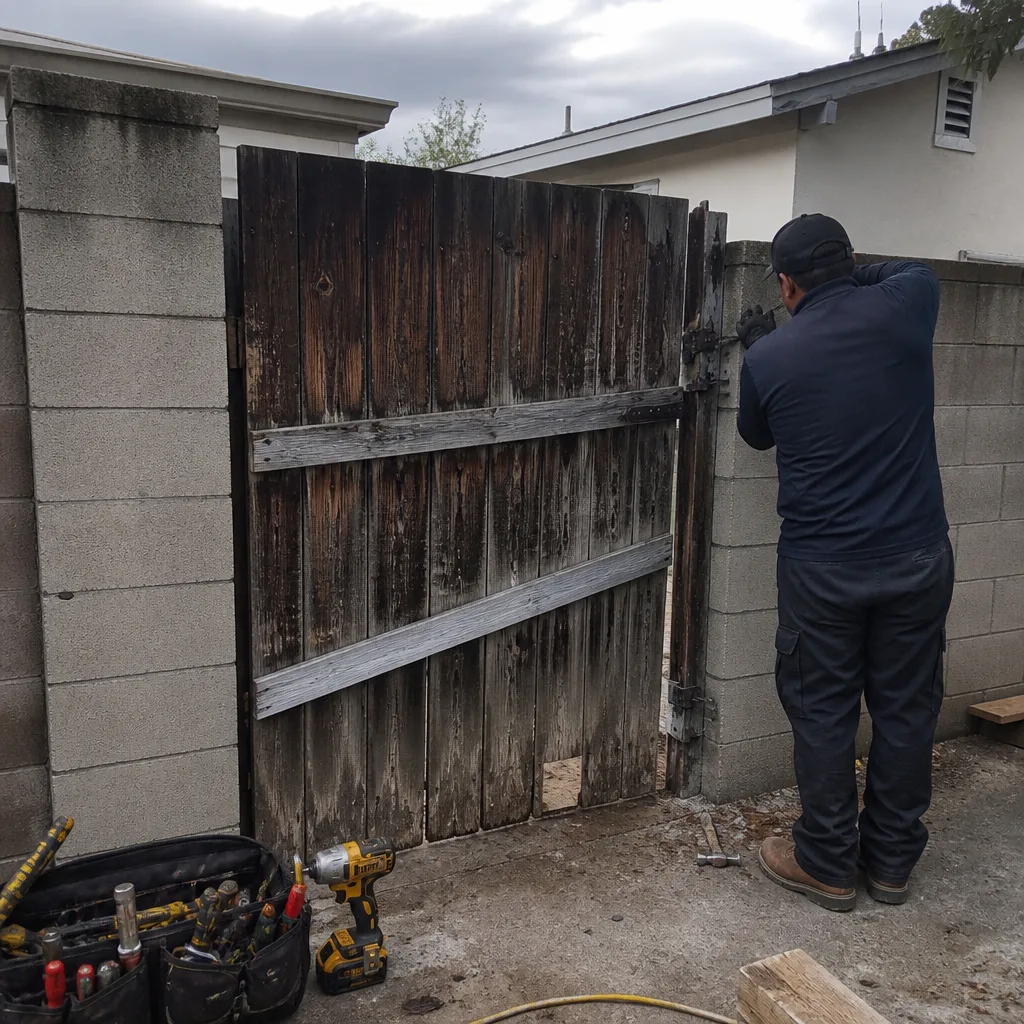 Before
 After
 Before
 After