
Last updated November 2, 2026
 Wrought iron
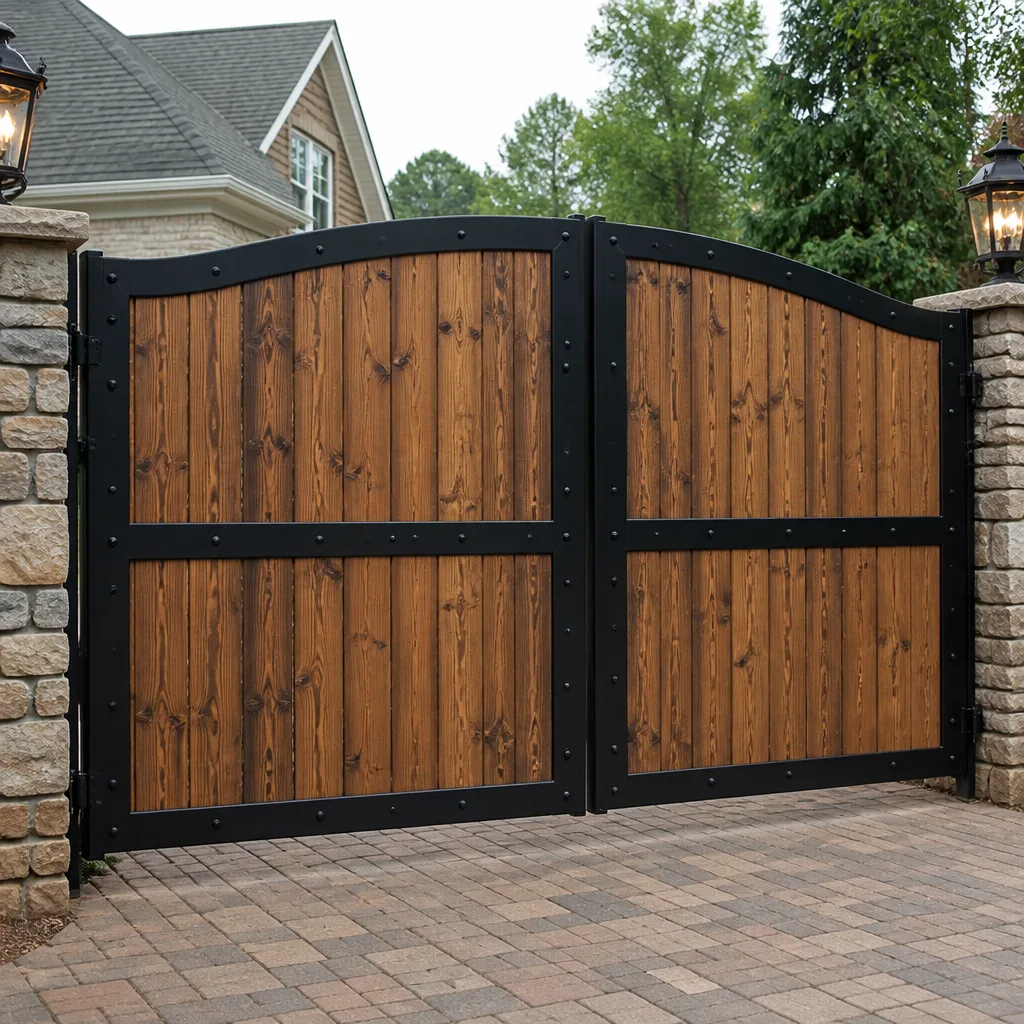 Wood & steel frame
 Farm & ranch
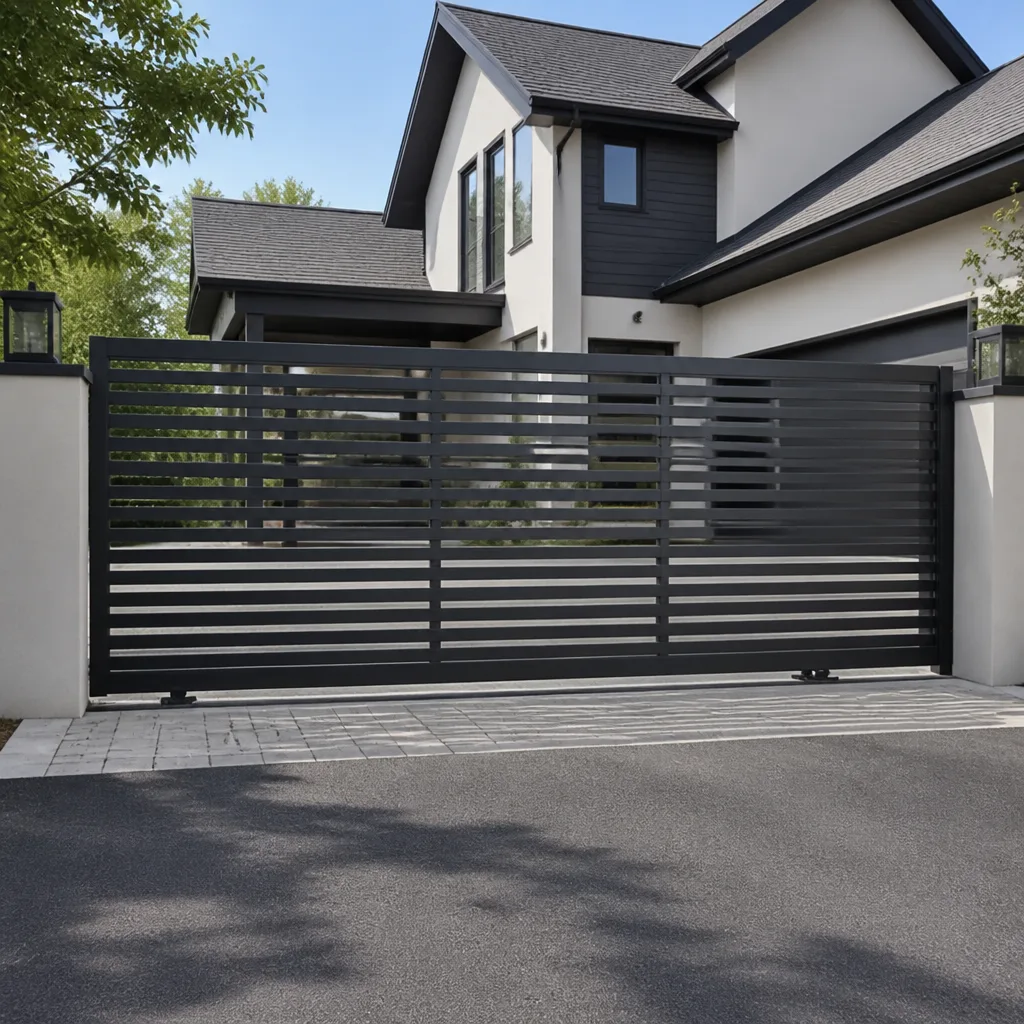 Sliding driveway gates
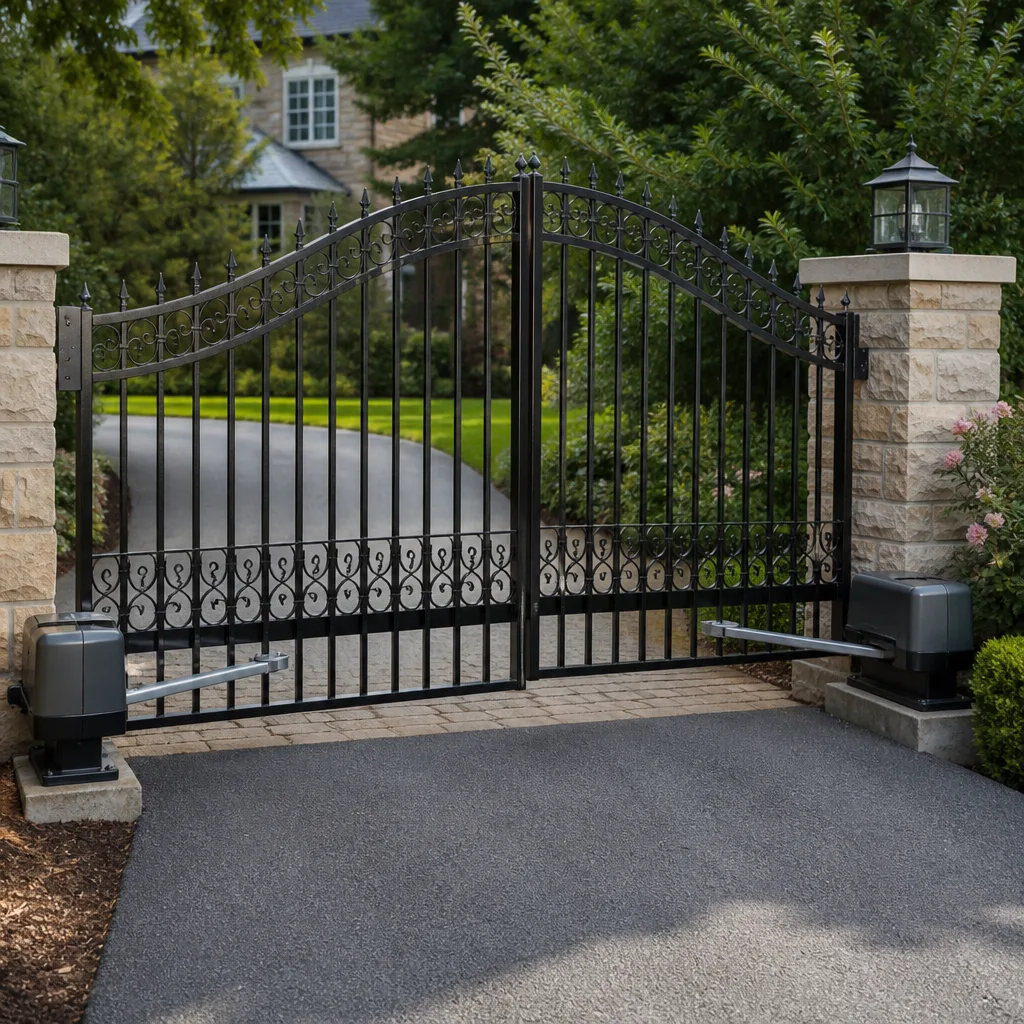 LiftMaster operators
Free on-site gate assessment - hinges, posts, and your LiftMaster or Nice gate operator checked before anything is quoted
The assessment is free and the quote is the invoice.
Get your free estimateGate Repair Maintenance Checklist for Jurupa Valley Homeowners
Lubricating your gate hinges in January means nothing if you don’t know that Jurupa Valley’s summer heat causes grease to thin and migrate away from contact surfaces by July. You end up with metal-on-metal wear at precisely the wrong time, usually mid-August when the gate decides to groan to a stop. This guide is written for the specific climate realities of Jurupa Valley, not the generic four-season advice you’ll find on most maintenance checklists. For more guides & resources, explore our blog. You’ll learn what to check monthly, what the heat and Santa Ana winds actually do to your gate hardware, and how to catch a failing motor or battery backup before it strands you or leaves your property unsecured.
Styles & brands we work with
- Wrought iron
- Wood & steel frame
- Farm & ranch
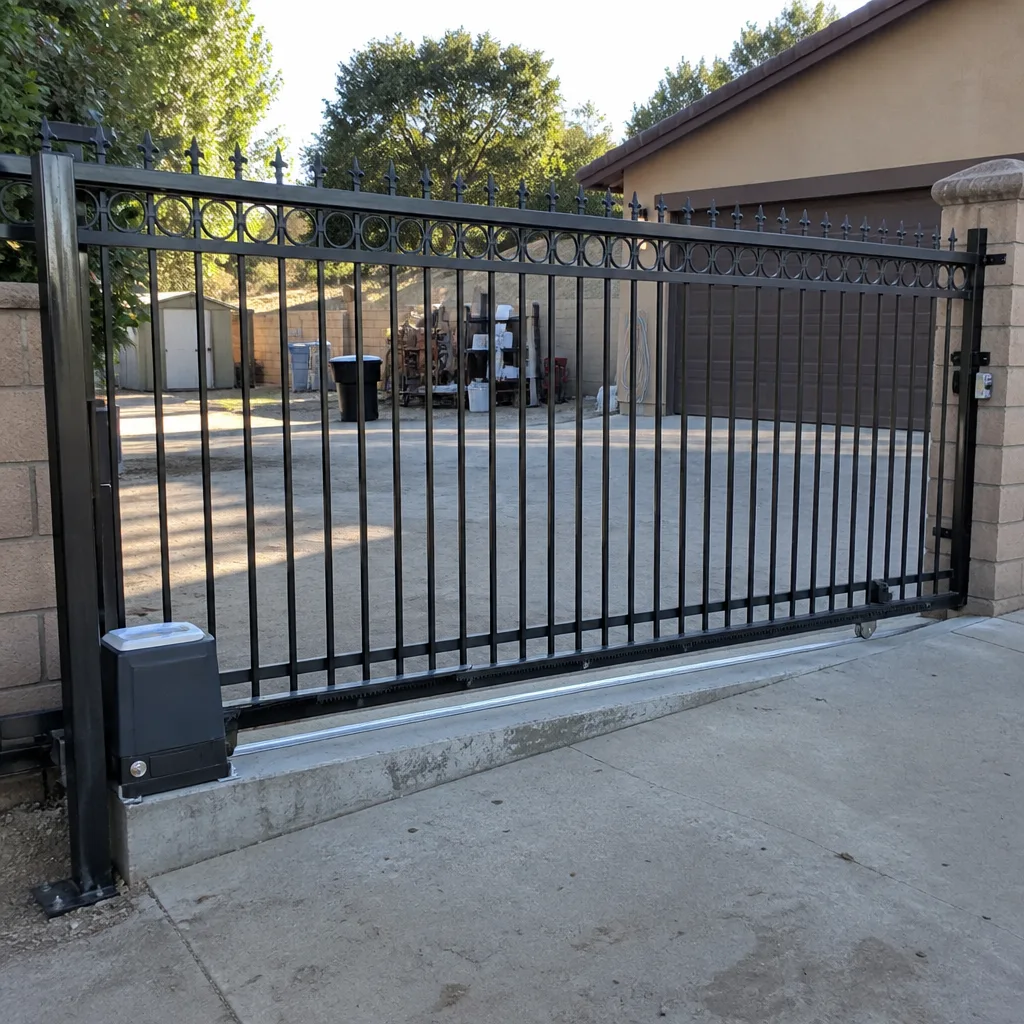
- Sliding driveway gates
- LiftMaster operators
Quick Answer
A Jurupa Valley gate maintenance checklist should focus on heat-related grease breakdown, dust accumulation from Santa Ana winds, and battery degradation from sustained high temperatures. The most important monthly tasks are cleaning the track and hinges, checking the safety sensors, and listening for changes in motor sound. The most important seasonal tasks are re-lubricating with a high-temperature grease in early summer, re-tensioning the chain or belt after thermal expansion cycles, and testing the battery backup every two months between May and October.
Table of Contents
- The Monthly Gate Maintenance Checklist for Jurupa Valley
- Why Jurupa Valley Heat Destroys Gate Grease Faster Than You Think
- How to Inspect and Re-Tension a Gate Chain or Belt After Summer Thermal Expansion
- Battery Backup Inspection: Heat Kills Standby Batteries Faster Than Most Homeowners Realize
- Safety Edge and Photo-Eye Alignment: The Skipped Check That Creates Liability
- Brand-Specific Maintenance Notes for Jurupa Valley Gates
- Santa Ana Wind Season Prep for Gate Hardware
- Common Mistakes to Avoid
- When to Call a Professional
- Frequently Asked Questions
- The Bottom Line
The Monthly Gate Maintenance Checklist for Jurupa Valley
Most gate maintenance advice online was written for climates that get rain and freezing winters. Jurupa Valley gets roughly 10 inches of rain a year and summer temperatures that routinely cross 100 degrees. That changes which tasks matter and how often you need to do them. Here is the monthly checklist we recommend for gates in Jurupa Valley, whether you have a Ghost Controls unit on a residential driveway or a DoorKing operator on a commercial entrance.
- Clear the track and ground rail of debris. Dust, gravel, and wind-blown leaves accumulate faster here than in coastal areas. A track gate with even a small rock wedged in the rail will put extra load on the motor every single cycle.
- Wipe down the safety photo-eye lenses. Dust coats the lenses within weeks, especially during Santa Ana wind season. A dirty lens acts like a blocked sensor and causes the gate to refuse to close or reverse mid-cycle.
- Listen to the motor during one full open and close cycle. You know the normal sound of your gate. A new grinding, clicking, or labored hum is the earliest warning sign of a failing gear, capacitor, or bearing. Catching it now costs a fraction of what it costs after total failure.
- Visually check hinges, bolts, and mounting hardware. Thermal cycling loosens fasteners. A hinge bolt backing out even a quarter inch changes the gate’s weight distribution and wears the motor unevenly.
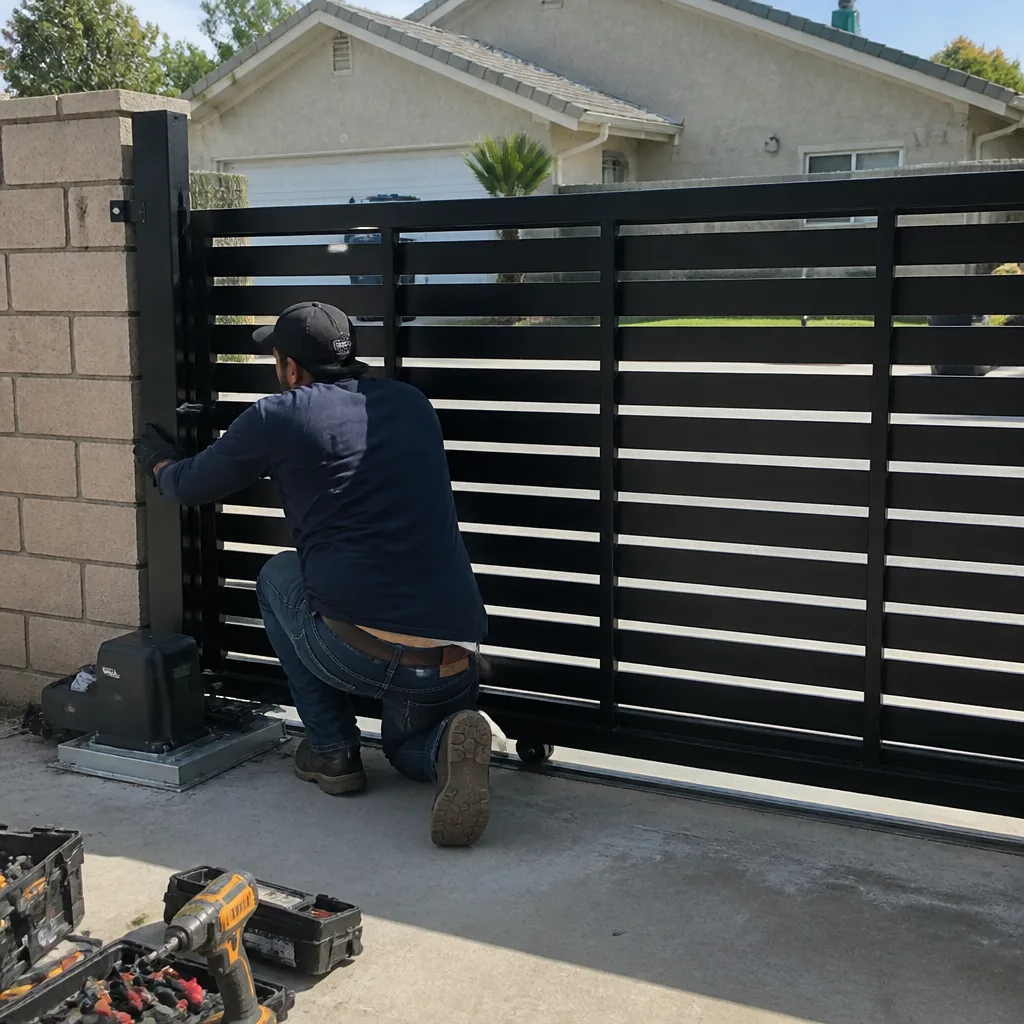
- Check the chain or belt tension by hand. On a chain drive, you should be able to deflect the chain slightly but not press it down more than half an inch. On a belt drive, look for fraying or glazing. We’ll cover tension in more detail below.
- Test the safety reverse function. Place a small object like a traffic cone or a cardboard box in the gate’s path and close the gate. It should reverse immediately on contact. If it doesn’t, stop using the gate until it’s inspected. This is the number one source of liability on residential and commercial automatic gates.
If you run through these six steps every month, you’ll catch most failures before they become emergencies. The full gate repair work we see in Jurupa Valley is almost always the result of a skipped inspection, not a sudden catastrophic failure.
Why Jurupa Valley Heat Destroys Gate Grease Faster Than You Think
Standard lithium grease rated for general use starts to soften and flow around 250 to 300 degrees Fahrenheit. That sounds fine until you realize a black metal gate sitting in direct Jurupa Valley sun on a 105-degree day can reach surface temperatures between 150 and 180 degrees. The grease doesn’t melt instantly, but it thins. Then gravity does the rest. Over weeks of consecutive triple-digit days, the grease migrates downward and away from the hinge pins and bearing surfaces where it’s needed. By July, many gates in Jurupa Valley are running with metal-on-metal contact at the hinge points, and the homeowner has no idea because they lubricated in the spring.
That’s why our maintenance recommendation for this area is different from what you’ll read on a general gate care article. We recommend re-lubricating hinges and bearing points twice a year in Jurupa Valley: once in early spring and again in mid-summer. The mid-summer application is the one most people skip, and it’s the one that matters most.
For Jurupa Valley conditions, use a grease rated for high-temperature service. Calcium sulfonate grease holds up better than standard lithium complex under sustained heat and doesn’t turn to liquid at 180 degrees surface temperature. Avoid white lithium spray grease for load-bearing hinge pins: it’s too thin for gate hinges that carry hundreds of pounds. Use a grease gun with a calcium sulfonate or marine-grade grease for the hinge pins, and apply a dry-film lubricant like PTFE spray to the track and rollers. Dry-film lubricants don’t attract dust the way wet oils do, which matters when the Santa Ana winds coat everything in a fine layer of grit.
We’ve seen gates in Jurupa Valley neighborhoods like Indian Hills and Pedley come in with hinge pins so worn from dry operation that the gate sags visibly. At that point, lubrication won’t fix the problem: the pin and bushing need replacement. Catching it at the lubrication stage saves the hardware.
How to Inspect and Re-Tension a Gate Chain or Belt After Summer Thermal Expansion
Your gate chain or belt is not a set-it-and-forget-it component. Metal chains expand in heat and contract in cold. After a full Jurupa Valley summer of 100-degree days, a chain that was properly tensioned in April will often be noticeably looser by September. That looseness is not a minor annoyance: a slack chain can jump a sprocket tooth, which throws the gate out of alignment and puts sudden load on the motor. On a belt drive, excess slack can cause the belt to ride up on the pulley edges and start fraying.
Here’s the step-by-step inspection and re-tensioning process we follow on every electric gate repair call in Jurupa Valley.
- Disconnect power to the gate operator. On most residential units, this means unplugging the operator or switching off the circuit breaker. On solar-powered Mighty Mule and Ghost Controls units, disconnect the battery first. Never work on a chain or belt while the operator can cycle.
- Manually move the gate to the midpoint of its travel. This is where chain or belt sag is most visible and easiest to measure.
- Measure the deflection. On a chain drive, press down on the chain at the midpoint. It should deflect roughly 1/4 to 1/2 inch. More than 1 inch of play means re-tensioning is overdue. On a belt drive, the belt should feel firm with no visible flapping when you pluck it lightly.
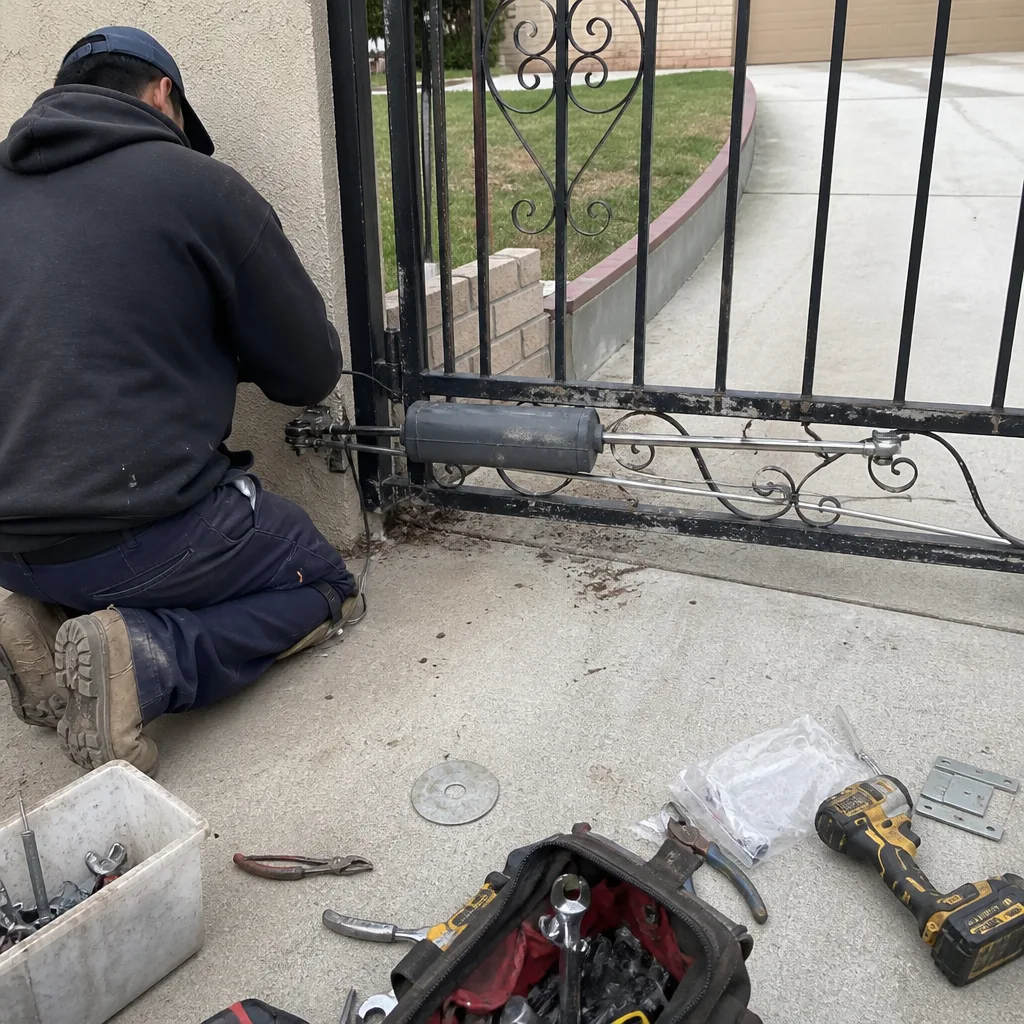
- Locate the tension adjustment on the operator. Most residential operators, including Ghost Controls and Mighty Mule swing-arm units and most sliding gate operators, have a tensioning bolt or an adjustable idler pulley. Loosen the locking nut, tighten or loosen the adjustment, and re-check deflection.
- Inspect the sprocket and pulley alignment while you’re in there. A chain that has been running loose for a season may have worn the sprocket teeth unevenly. If the teeth look hooked or asymmetrical, the sprocket needs replacement, not just re-tensioning. Continuing to run a worn sprocket will destroy a new chain within months.
- Reconnect power and run a full cycle. Watch the chain or belt through the entire open and close. Listen for clicking, which indicates the chain is still too loose and contacting the housing.
If you’re uncomfortable with any step in that process, or if you find worn sprockets, frayed belts, or a chain that won’t hold tension, have a gate specialist look at it. A chain that comes off at speed on a sliding gate can damage the operator gearbox beyond economical repair.
Battery Backup Inspection: Heat Kills Standby Batteries Faster Than Most Homeowners Realize
Most gate operators in Jurupa Valley have battery backup systems, either as the primary power source for solar units or as a standby for grid-connected operators. Here’s what most homeowners don’t know: battery life is rated at a specific ambient temperature, usually 77 degrees Fahrenheit. For every 15 degrees above that, battery life drops by roughly half. A sealed lead-acid battery that would last four years in a mild climate often lasts two years or less in a Jurupa Valley equipment cabinet that sits in direct sun.
We’ve seen a pattern across hundreds of service calls in Jurupa Valley: the homeowner has a battery backup that hasn’t been tested in two years, the grid goes down during a summer outage or a wind event, and the gate won’t open. The battery was dead months before, but nobody knew because the gate runs on AC power the rest of the time.
Here’s the battery inspection protocol we recommend for Jurupa Valley homeowners:
- Test the battery backup every two months from May through October. Cut power to the operator at the breaker, then operate the gate. It should open and close at full speed on battery power. If it moves slowly, reverses, or won’t operate at all, the battery is degraded.
- Check the battery terminals for corrosion every six months. Heat accelerates corrosion on lead terminals. White or green crust on the terminals increases resistance and reduces effective battery output.
- Look for swelling in the battery case. Heat causes batteries to swell. A visibly bulging battery is a fire hazard and needs replacement immediately.
- Know the age of your battery. Write the installation date on the battery with a permanent marker. In Jurupa Valley’s climate, a sealed lead-acid gate battery should be considered suspect after two years and replaced proactively after three.
For solar-powered gates using Mighty Mule or Ghost Controls systems, the same rules apply, but the battery is the primary power source, so a degraded battery shows up as slow gate operation every day, not just during outages. If your solar gate moves noticeably slower in the morning than it does in the afternoon, the battery is likely losing capacity and you should have it load-tested.
Safety Edge and Photo-Eye Alignment: The Skipped Check That Creates Liability
The safety system on your automatic gate is not optional equipment. Under California law and the UL 325 standard, automatic gate operators must be equipped with a primary entrapment protection device, either a monitored safety edge, photo-eye sensors, or both. See our guide on Gate Repair Permits, Codes & Inspections in CA: What You Need to Know for full details. When these systems fail or drift out of alignment, the gate can close on a person, a vehicle, or a pet. The legal and financial consequences of a gate that closes on someone are significant, and the homeowner or property owner bears responsibility for maintaining the safety systems.
Photo-eye alignment is a particularly common issue in Jurupa Valley. These sensors are mounted on posts near the gate and rely on a clear infrared beam between them. The high winds during Santa Ana events can shift posts, move sensor brackets, or coat the lenses in dust. A photo-eye that’s slightly out of alignment will cause the gate to refuse to close or reverse at random, which is frustrating but safe. The dangerous scenario is a photo-eye that’s bypassed or miswired so the gate closes regardless.
Here’s the safety inspection we recommend every month, and especially after any high-wind event:
- Check that both photo-eye lenses are clean and unobstructed. Dust, cobwebs, and wind-blown debris are constant in Jurupa Valley. Wipe the lenses with a dry cloth.
- Verify the photo-eyes are aligned. Most photo-eye units have an indicator LED that shows green when the beam is received and red or off when blocked or misaligned. If the light is not green with no obstruction between the sensors, alignment is off.
- Test the safety edge if your gate has one. Press the rubber edge firmly while the gate is closing. The gate should immediately reverse. Do this test once a month.
- Check the wiring connections at the operator board. If you’re comfortable opening the operator cover, look for loose or corroded wire terminals on the safety circuit inputs. Tighten any loose connections with the power off.
If your gate has no functioning safety edge or photo-eye, or if the safety devices have been bypassed by a previous installer, stop using the automatic function and have the system brought up to code. This is not a check you can skip. A gate that closes on a child or a delivery driver is a liability no homeowner wants to face.
Brand-Specific Maintenance Notes for Jurupa Valley Gates
Different gate operator brands have different maintenance profiles, and the climate of Jurupa Valley affects them differently. Here are the most common issues we see on specific brands in this area.
Ghost Controls: These residential swing-arm operators are popular in Jurupa Valley because of their solar compatibility. The most common heat-related failure is the control board overheating inside the operator housing, especially when the housing is dark-colored and mounted in direct southern exposure. If your Ghost Controls unit shuts down on very hot days and works again after sunset, the board is likely thermal tripping. Adding a shade cover over the operator or relocating the control box to a shaded area often solves it.
Mighty Mule: The battery in a Mighty Mule solar system is the weak point in Jurupa Valley heat. These systems ship with a sealed lead-acid battery that degrades quickly at high cabinet temperatures. The symptom is a gate that gets slower and slower over weeks, then stops entirely. Replacing the battery every two years is cheap insurance. Also check the solar panel for dust accumulation during Santa Ana season: a dusted panel charges at a fraction of its rated output.
DoorKing: DoorKing operators are common on commercial and estate properties in Jurupa Valley. These are rugged units, but the limit switches and chain idlers need more frequent adjustment in this climate than the manual suggests. The heat cycling causes limit drift, which shows up as a gate that stops short of full open or overshoots the closed position. Re-set the limits after every summer and after any period where the gate has been unused for two weeks or more.
Elite: Elite sliding gate operators are often paired with heavy commercial gates, and the drive chain is the component to watch in Jurupa Valley. The combination of heat expansion and dust intrusion shortens chain life noticeably. We recommend checking chain tension every month on heavy Elite sliding gate installations, not quarterly as the generic guidance suggests. A loose chain on a heavy commercial gate causes shock loads that damage the gearbox over time.
If you have a brand we haven’t mentioned, the general maintenance principles in this guide still apply. The specific failure modes vary by brand, but heat, dust, and battery degradation are universal in Jurupa Valley.
Santa Ana Wind Season Prep for Gate Hardware
The Santa Ana winds typically hit Jurupa Valley between September and January, with the strongest gusts often in October and November. Wind speeds can exceed 50 mph in exposed areas, and the dry, gusty conditions create a few specific problems for gate systems.
First, wind load on a solid gate panel is enormous. A 16-foot steel gate acting as a sail in a 50 mph gust can exert hundreds of pounds of lateral force on the hinges, the operator, and the foundation posts. If the gate is a solid panel design rather than an open picket or wrought-iron style, wind load is even higher. Gates that are properly braced and have tight hinges handle this fine. Gates that already have loose hinge pins or worn bushings get worse quickly during wind season because the gusts hammer the loose hardware.
Second, wind-blown dust and debris get into everything: the track, the operator housing, the photo-eye lenses, the limit switches. After any significant wind event, expect to clear debris from sliding gate tracks and wipe down photo-eyes. It’s also a good time to check that the operator housing seal is intact. Dust intrusion into the electrical compartment is a slow killer of circuit boards and relays.
Third, wind events often coincide with power outages, which means the battery backup gets called into action. The battery that worked fine in September might be the thing that fails in an October wind event. That’s why our battery testing schedule for Jurupa Valley runs through October.
Before wind season, we recommend one thorough inspection: tighten all hinge bolts and mounting hardware, check chain or belt tension, clean the track and lenses, and run a battery test. If you have a swing gate, close and latch it during the highest wind events if possible. An unlatched swing gate in high wind can be blown hard against its stops, bending brackets and stripping gears.
Common Mistakes to Avoid
- Lubricating without cleaning first. Applying fresh grease over dirt and grit creates a grinding paste that accelerates wear. Wipe the surface clean, then lubricate. This matters more in Jurupa Valley because of the constant dust.
- Using WD-40 on gate hinges. WD-40 is a solvent and water displacer, not a lubricant. It strips away whatever grease was there and evaporates, leaving the hinge drier than before. Use a proper grease or dry-film lubricant.
- Only checking the gate when it stops working. By the time the gate stops working, the damage is done. Monthly checks catch problems at the adjustment stage, not the replacement stage.
- Oiling a belt drive. Belts do not get lubricated. Oil or grease on a belt attracts dust and causes the belt to slip. Clean and dry is the correct state for a belt drive.
- Ignoring a slow gate. A gate that opens slower than it used to is telling you something. It could be a weak battery, a failing capacitor, or a motor drawing too much current. Slow operation is never a normal condition.
- Testing the battery backup only during outages. If the first time you test the battery is during a real power outage, you’ve already lost whatever protection the backup was supposed to provide. Test it on a schedule.
- Bypassing safety sensors to stop false reversals. If your gate reverses for no reason, the fix is to align or clean the photo-eyes, not to bypass them. A bypassed safety system is a serious liability and a code violation.
When to Call a Professional
Some maintenance tasks are homeowner-appropriate: cleaning, lubricating, checking deflection, testing batteries. Others are not. If you see worn sprocket teeth, a frayed belt, a bulging battery, a cracked hinge weld, or any damage to the operator’s electrical wiring, those are repair-level issues. High-tension springs on cantilever gates and torsion springs on some swing gate designs can cause serious injury if released incorrectly. Gate operators run on 120V or 240V AC power, and a capacitor inside the operator housing can hold a charge even after the unit is unplugged. If the work involves opening the operator housing and you’re not familiar with electrical safety, have a trained technician handle it. Our Gate Repair services include free estimates in Jurupa Valley. Call (866) 383-9857 and we’ll diagnose the issue and quote the repair before any work starts.
We’re a gate specialist, not a generalist. Our technicians work on gates every day, across brands like DoorKing, Elite, Ghost Controls, and Mighty Mule. We’ve seen the specific failure patterns this climate creates, and we bring the right tools and parts for the job the first time. For homeowners considering gate installation in Jurupa Valley, we also handle new installs from the operator to the hinges, so you don’t need to source a separate installer.
Frequently Asked Questions
Twice a year: once in early spring and once in mid-summer. The summer application is critical because Jurupa Valley’s sustained high temperatures thin the grease and cause it to migrate away from the hinge pins. Use a calcium sulfonate or high-temperature grease, not standard lithium grease or WD-40. Call (866) 383-9857 if you’re not sure what type your gate needs.
A gate that moves slower on hot days usually indicates a control board or motor that’s overheating, especially if the gate works normally in the cooler evening hours. It can also be a battery that’s lost capacity and can’t deliver full current at high temperatures. Either way, continued operation in that condition shortens the life of the motor. We diagnose this exact issue regularly on electric gate systems in Jurupa Valley, and the fix is usually straightforward once the real cause is identified. For help identifying problems yourself, see our Gate Repair Troubleshooting: Common Problems and How to Fix Them guide.
In our experience, a sealed lead-acid gate battery in Jurupa Valley lasts two to three years, not the four to five years manufacturers quote at lower ambient temperatures. The sustained heat inside an equipment cabinet accelerates battery degradation. Test your battery backup every two months between May and October, and plan on proactive replacement after three years.
After any significant wind event, clear debris from the track, wipe the photo-eye lenses, check that hinge and mounting bolts are still tight, and test the gate through a full cycle. Wind load can shift posts and loosen hardware even on properly installed gates. If the gate is a swing gate, check the latch and stops for damage from wind gusts.
You can re-tension a gate chain yourself if you’re comfortable disconnecting power and following the operator’s adjustment procedure. However, if the chain has been loose for months, the sprockets may be worn, and simply tightening the chain will accelerate the damage. If you see hooked or asymmetrical sprocket teeth, call us at (866) 383-9857 for a proper inspection and quote before any work starts.
For a residential gate, an annual professional inspection is a good baseline, with more frequent checks if the gate is older or carries heavy daily cycles. For commercial gates, every six months is the norm. A professional inspection catches limit drift, sprocket wear, battery degradation, and safety system issues before they cause a failure. Our gate repair service in Jurupa Valley includes safety system verification on every visit.
The Bottom Line
Gates in Jurupa Valley don’t fail because they’re poorly made. They fail because the maintenance routines homeowners inherited from other climates don’t match the actual conditions here. The heat thins your grease by July. The Santa Ana winds coat your sensors and track in dust every autumn. The battery in your backup system is aging twice as fast as the manufacturer’s spec sheet suggests. If you take nothing else from this guide, take the six-item monthly checklist seriously, re-lubricate in mid-summer, test the battery every two months in the hot season, and check the safety reverse function monthly. Fifteen minutes a month keeps a gate running for years. When something does need repair, contact Gate Repair in Jurupa Valley. You’ll get a diagnosis and a price before we start any work. Call (866) 383-9857 for a free estimate.
Written by the team at Gate Repair Jurupa Valley, serving Jurupa Valley since 2015.
See the difference
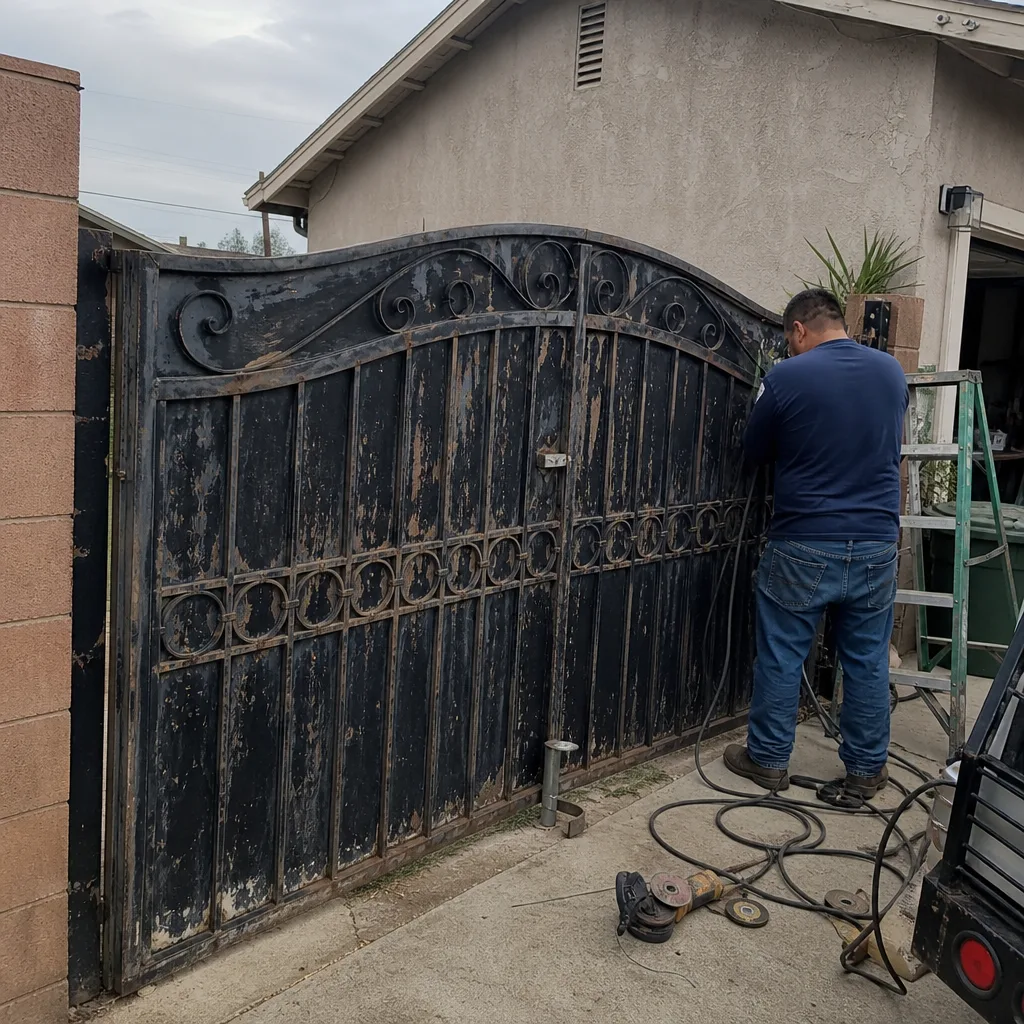 Before
 After
 Before
 After
 Before
 After