
Last updated November 3, 2026
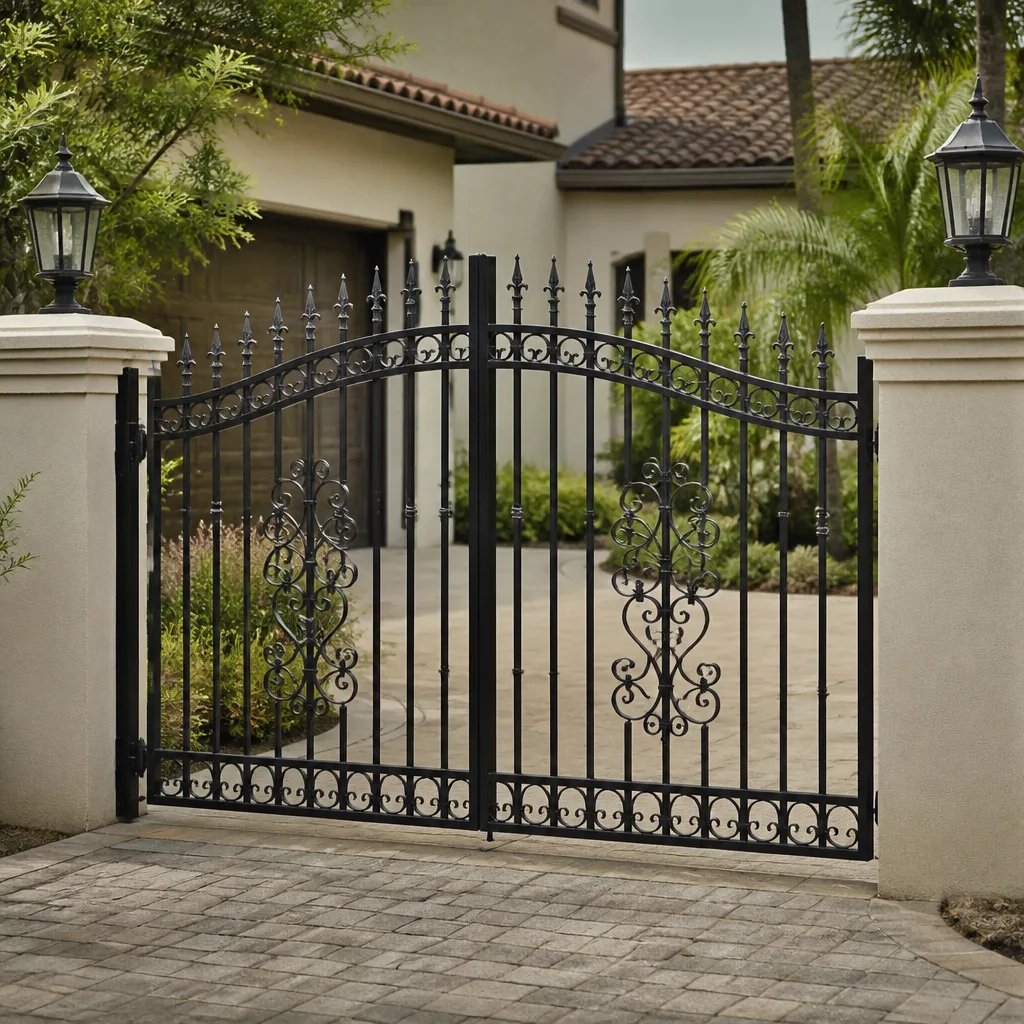 Wrought iron
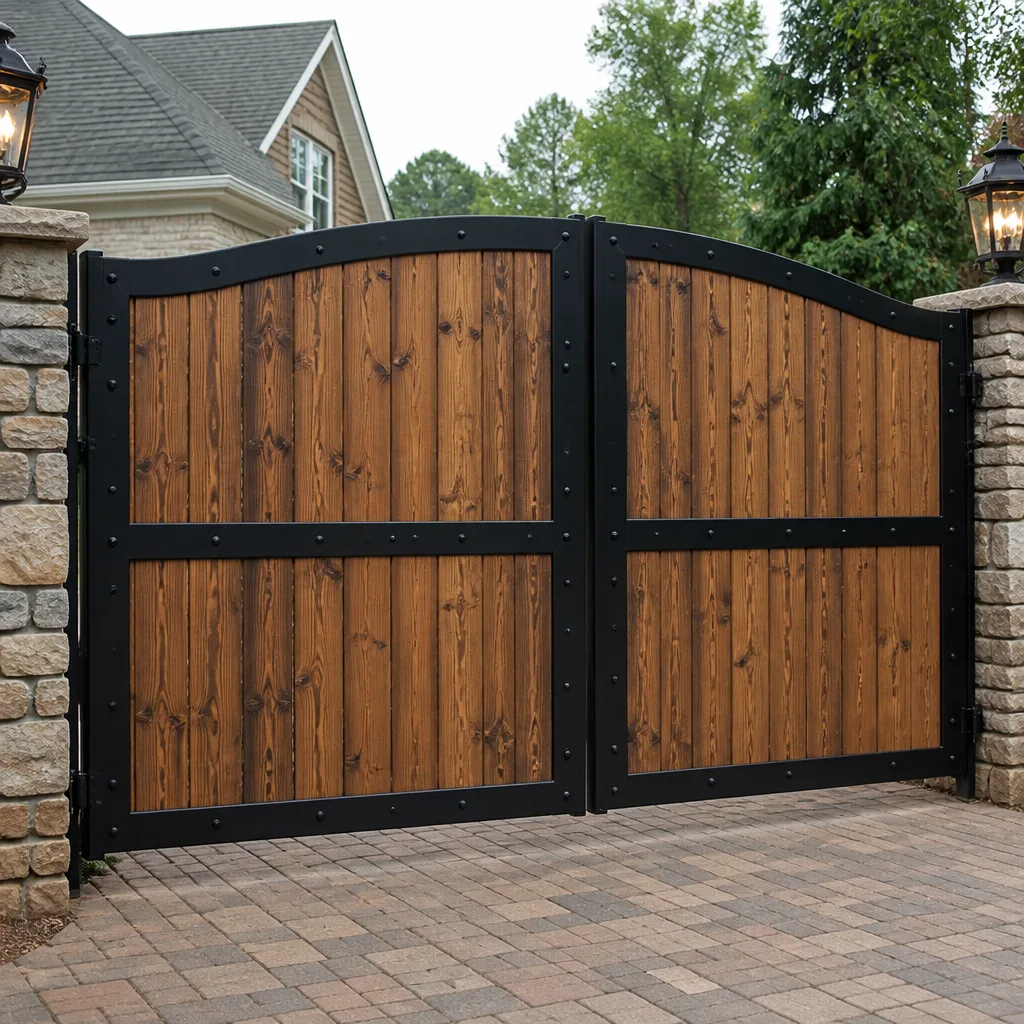 Wood & steel frame
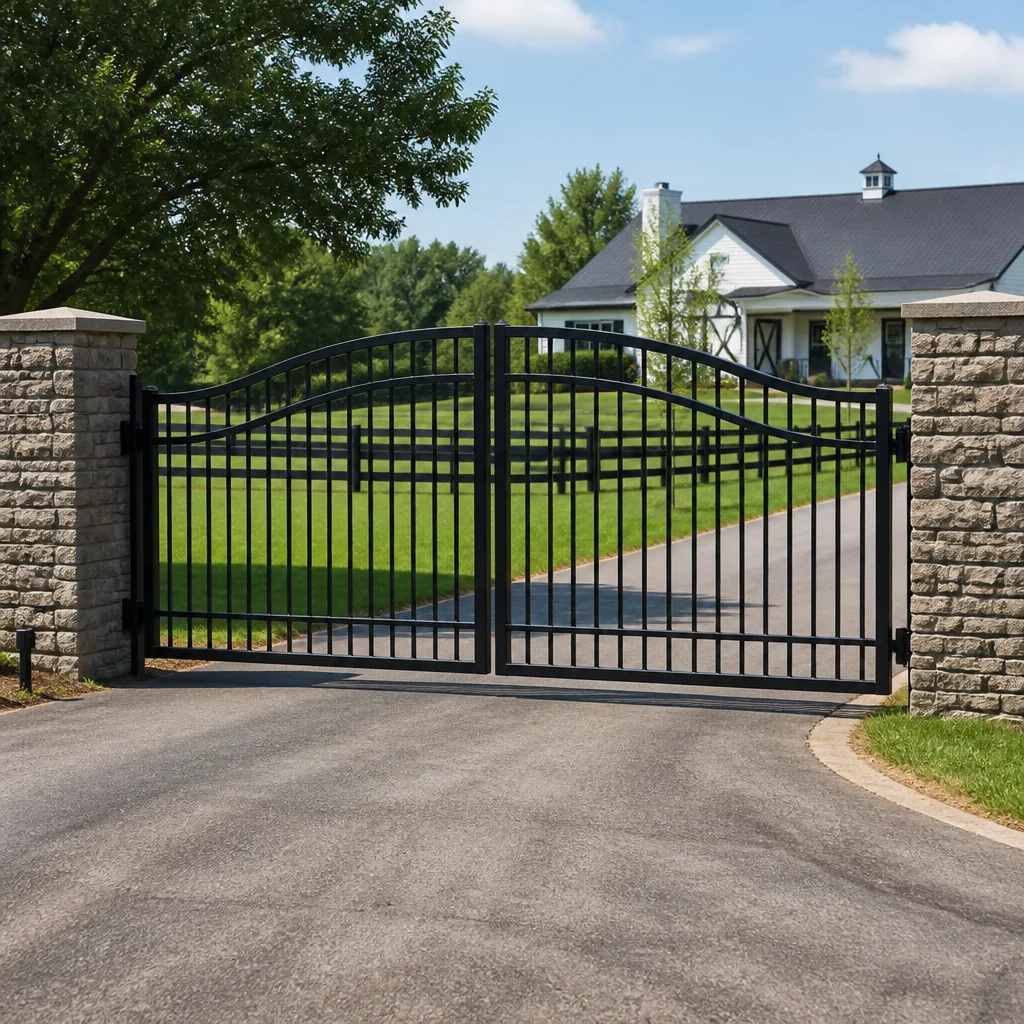 Farm & ranch
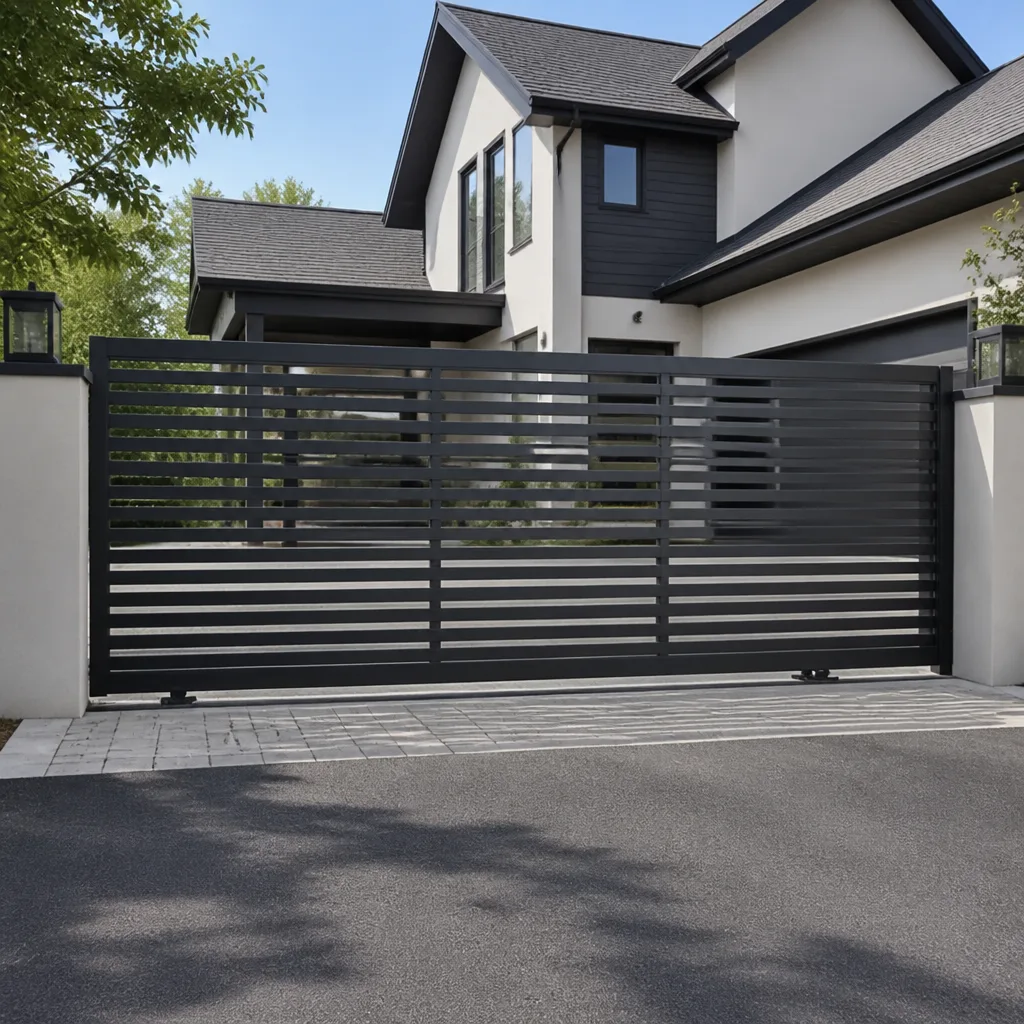 Sliding driveway gates
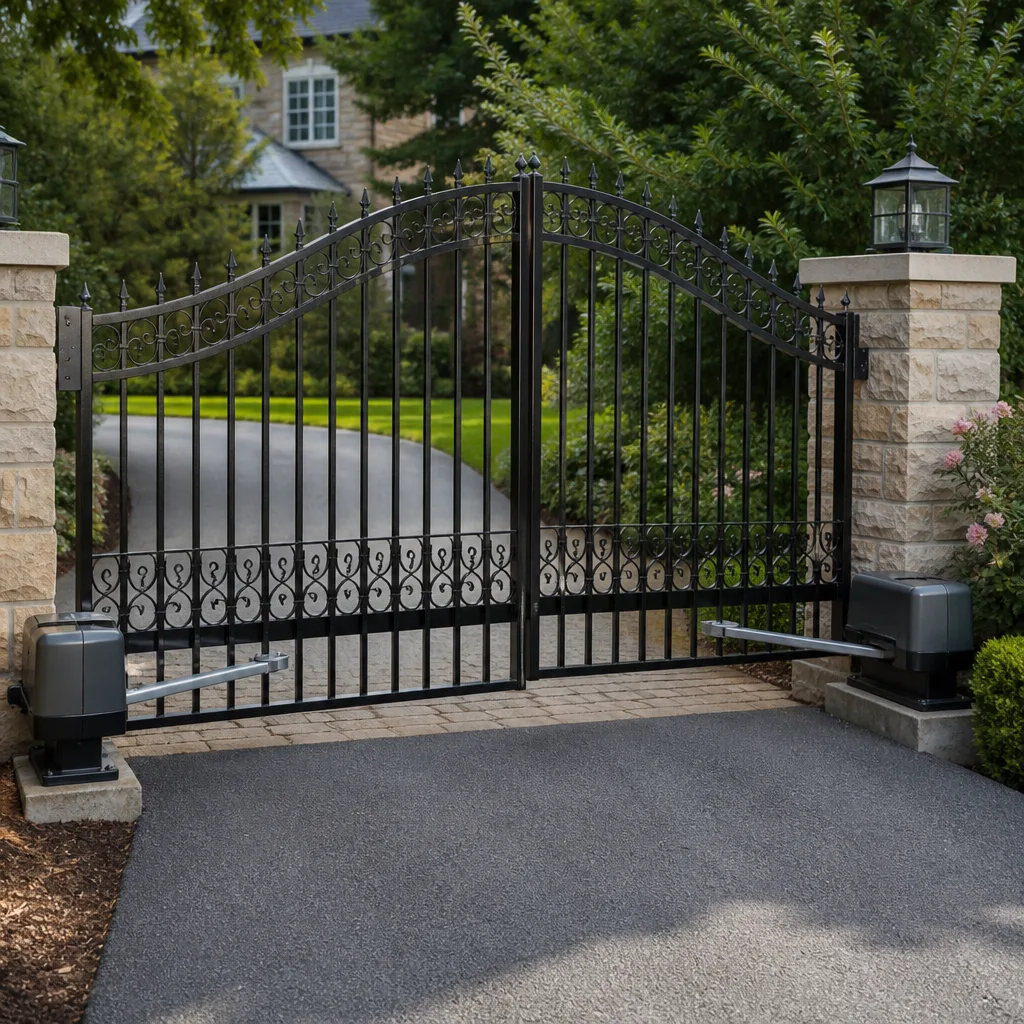 LiftMaster operators
Free on-site gate assessment - hinges, posts, and your LiftMaster or Nice gate operator checked before anything is quoted
The assessment is free and the quote is the invoice.
Get your free estimateThe Complete Gate Repair Guide for Jurupa Valley Homeowners
Jurupa Valley sits in a climate zone where summer asphalt temperatures routinely exceed 150°F, and that same heat warps gate tracks, degrades hydraulic fluid viscosity, and cooks circuit boards in operators that weren’t spec’d for direct-sun exposure. Most repair guides don’t mention your zip code’s weather. This one is built around it. You’ll learn how clay-heavy soil shifts your gate posts, why dust kills safety sensors faster than age does, and the exact seasonal maintenance schedule that prevents a July breakdown in Jurupa Valley. For a deeper dive, see The Complete Guide to Gate Repair in Jurupa Valley. We’ll also cover when a repair makes sense and when you’re better off replacing the whole system.
Quick Answer
Gate repair in Jurupa Valley typically costs $180 to $680 for mechanical issues and $300 to $1,200 for electric operator repairs, with most jobs completed same-day or next-day. The most common failures we see are post misalignment from clay soil shift, photo-eye sensor failures from dust, and circuit board damage from heat exposure. Your first step is documenting your gate’s brand and model, checking for visible damage, and calling Gate Repair in Jurupa Valley for a free estimate before any work begins.
Styles & brands we work with
- Wrought iron
- Wood & steel frame
- Farm & ranch
- Sliding driveway gates
- LiftMaster operators
Table of Contents
- The Anatomy of a Gate System: What Actually Breaks in Jurupa Valley
- How Jurupa Valley’s Clay-Loam Soil Causes Gate Failure
- Heat, Dust, and Your Gate Operator: Inland Empire Failure Modes
- Seasonal Maintenance Calendar for Jurupa Valley Gates
- Component-by-Component Guide: Hinges, Operators, Sensors, Intercoms
- Repair vs. Replace: How to Know When a Gate Is Past Its Service Life
- Documenting Your Gate System Before an Emergency
- Electric Gate Repair: What a Specialist Actually Diagnoses
The Anatomy of a Gate System: What Actually Breaks in Jurupa Valley
A gate is not one machine. It’s a system of mechanical and electrical components that all have to work together, and each component has its own failure patterns in this climate. Understanding the anatomy is the difference between fixing the symptom and fixing the cause. When a gate stops working in Jurupa Valley, the problem is usually in one of five places: the physical gate structure, the hinges, the operator, the safety sensors, or the access control system.
The physical gate itself is typically steel or wrought iron, powder-coated to resist rust. That coating takes a beating from Inland Empire sun and occasional Santa Ana winds carrying fine grit. Once the coating is compromised, rust starts, and rust spreads fast on a moving structure. Hinges carry the entire weight of the gate, and when they wear or sag, the gate drags, binds, and forces the operator to work harder than it was designed to. The operator is the motor and control board that moves the gate. Safety sensors are the photo-eyes or edge sensors that stop the gate when something is in the way. Access control includes keypads, remotes, intercoms, and loop detectors that trigger the gate.
We work on your brand. Whether it’s a LiftMaster swing operator or a FAAC hydraulic arm, the diagnosis method changes because the failure modes differ by manufacturer. In our experience, a Linear operator that won’t respond is usually a control board issue, while a BFT that moves slowly is often hydraulic fluid degradation from heat cycling. Knowing the brand means knowing where to look first.
The good news: most gate problems are repairable. The bad news: a lot of Jurupa Valley homeowners replace components unnecessarily because the underlying cause, usually soil movement or heat stress, was never addressed. That’s what this guide fixes, and our Gate Repair service addresses the root cause every time.
How Jurupa Valley’s Clay-Loam Soil Causes Gate Failure
Here’s something most gate repair guides skip: your gate’s foundation is soil, and Jurupa Valley soil is predominantly clay-loam. Clay expands when wet and contracts when dry, and the Inland Empire cycles between winter rains and six months of near-zero precipitation. That seasonal swelling and shrinking moves gate posts. A post that shifts half an inch at the base translates to several inches of misalignment at the gate’s free end.
When a gate sags or drags, the first instinct is to blame the hinges or the operator. Sometimes that’s right. But if the posts have moved, replacing hinges or adjusting the operator just masks the problem. The gate will misalign again within months. In neighborhoods like Mira Loma and Pedley, where older homes sit on decades-old post footings, we regularly see gates that were “fixed” three or four times before anyone checked the post alignment. The fix is re-setting the posts in proper concrete footings sized for the soil, and in severe cases, installing steel post reinforcement.
How to check if your posts have moved:
- Stand back and sight down the gate line. If the gate doesn’t hang parallel to the ground, the post has moved or the hinges have worn.
- Look at the gap between the gate and the latch post. If it’s wider at the top than the bottom, the hinge post has tilted.
- Check for fresh cracks in any concrete around the post base. Hairline cracks are normal. Gaps wider than a quarter-inch mean movement.
- Test the gate by hand in manual mode if your operator has a release. It should swing or slide smoothly without binding. If it catches, the geometry has changed.
This matters for one simple reason: an operator that’s fighting a misaligned gate burns out motors and control boards. The operator didn’t fail. The soil failed first, and the operator paid for it. That’s why our Gate Installation in Jurupa Valley work always starts with post and footing assessment, not just bolting a motor to whatever is already there.
Heat, Dust, and Your Gate Operator: Inland Empire Failure Modes
Jurupa Valley summer heat doesn’t just make you uncomfortable. It changes how your gate operates at a material level. Hydraulic operators from brands like BFT and FAAC use oil that thins out when the ambient temperature climbs past 100°F. Thinner oil passes through seals differently, pressure drops, and a gate that moved fine in March starts creeping or stalling in July. The fluid isn’t broken. It’s hot, and the system wasn’t compensated for that.
Electromechanical operators, including most LiftMaster and Linear models, face a different problem. The control board lives inside a metal housing that bakes in direct sun all afternoon. Surface temperatures on that housing can exceed 160°F in Jurupa Valley summer, and internal temperatures climb higher. Capacitors degrade faster, solder joints fatigue, and relays stick. A board that was rated for a 10-year life might last 5 or 6 years in this climate if it’s positioned on a west-facing wall without shade. That’s not a manufacturing defect. That’s environment.
Then there’s dust. Jurupa Valley sits in a semi-arid basin, and the wind off the Santa Ana River picks up fine silt. That dust finds its way into operator housings, hinge grease, and most critically, photo-eye safety sensors. A thin film of dust on a sensor lens diffuses the infrared beam, and the gate behaves like something is constantly blocking it. It stops mid-cycle, reverses, or refuses to close. The fix is usually simple: clean the lens. But if dust has worked into the internal electronics, the sensor needs replacement.
Heat and dust together create a specific failure signature: gates that work at 7am when it’s cool, then fail at 2pm, then work again at 8pm. If your gate has started a pattern of afternoon failures, the operator is overheating, and the fix is better ventilation, a shade structure, or relocating the operator housing, not just resetting the breaker. A gate specialist, not a generalist, recognizes that pattern on the first phone call.
Seasonal Maintenance Calendar for Jurupa Valley Gates
The smartest repair is the one you never need. In the Inland Empire climate, maintenance is seasonal, and the calendar is different than what you’d follow in coastal California or anywhere with milder summers. Here’s the schedule we recommend for every automatic gate in Jurupa Valley:
Late Spring (May, before the heat hits)
- Clean and test both photo-eye sensors. Dust accumulation peaks in spring, and you want them clean before summer heat bakes dust onto the lenses.
- Check hydraulic fluid levels and color on BFT and FAAC operators. Dark, cloudy fluid is a sign of heat degradation from last summer.
- Lubricate all hinges and pivot points with a dry silicone or lithium spray. Avoid grease that attracts dust.
- Test the gate’s manual release. Cable pulls can seize over winter, and you don’t want to discover that during a summer power outage.
Mid-Summer (July to August, peak heat)
- Listen for changes in motor pitch. A motor that sounds strained in the afternoon is overheating, not just working hard.
- Check the operator housing temperature by hand. If you can’t hold your palm on it for five seconds, it needs shade or ventilation.
- Inspect for gate drag in the late afternoon. Heat expansion can warp the gate itself, especially wide swing gates with thin steel skins.
Late Fall (October to November, pre-rain)
- Inspect all weather seals on the operator housing and any exposed control wiring. Rain intrusion kills boards fast.
- Check post bases for new cracks after the first rain. This is when clay soil starts expanding, and movement shows up early.
- Test the auto-reverse function by placing a trash can or board in the gate’s path. This is a safety check, not a convenience check. A gate that doesn’t reverse can injure someone, and physical injuries from gates are a real liability.
Winter (December to February)
- Check for rust spots on the gate frame and touch up with cold-galvanizing spray. Rust accelerates in winter rain, even in SoCal.
- Verify that drainage around the post bases hasn’t pooled water. Clay-loam soil holds water against the post for weeks.
- Test all remotes and keypads. Cold snaps kill weak batteries, and a dead remote on a rainy morning is a security gap.
Component-by-Component Guide: Hinges, Operators, Sensors, Intercoms
Every gate component has a typical service life in Jurupa Valley’s climate. Knowing those numbers helps you budget and helps you recognize when a repair is normal wear versus a symptom of something bigger. Here’s the breakdown:
Hinges
Standard gate hinges on a well-aligned gate last 8 to 12 years in this climate. Heavy-duty ball-bearing hinges last 15 or more. But a hinge on a gate with moving posts can wear out in 2 to 3 years. If you’ve replaced hinges twice in five years, the hinges aren’t the problem. The posts are. Hinges show wear as visible sagging at the free end, scraping sounds during travel, or uneven gap lines when the gate is closed.
Operators
Electromechanical operators from LiftMaster or Linear typically last 7 to 10 years with proper maintenance. Hydraulic operators from BFT or FAAC last 10 to 15 years if the fluid is changed on schedule. But in Jurupa Valley, operators on unshaded west walls lose 30 to 40 percent of that lifespan. Installation location is as important as installation quality. A properly shaded, well-ventilated operator will outlast an identical model that’s cooking in afternoon sun.
Control Boards
This is the most heat-sensitive component in the entire system. A control board in a shaded, ventilated housing can last a decade. The same board in a sun-blasted metal box might fail in 4 years. Symptoms of a failing board include intermittent operation, doors that open but won’t close, remotes that work sometimes, and burned or bulging capacitors visible on inspection. We stock boards for major brands and carry them to every service call.
Safety Sensors
Photo-eye sensors last 5 to 8 years in Jurupa Valley, but the limiting factor is dust, not age. A sensor that’s cleaned twice a year will usually outlast the operator. One that’s ignored will fail early, often from dust working into the internal electronics and causing false blocked-signal readings. Edge sensors on the gate’s leading edge have a similar lifespan, but they’re also vulnerable to physical damage from gate strikes.
Intercom and Access Control Systems
Keypads last 5 to 7 years on average. Remotes last 2 to 3 years before battery or button wear becomes annoying. Intercom panels for residential communities or multi-unit properties typically need replacement or major repair every 6 to 8 years, and DoorKing systems in particular have known capacitor failure patterns that we can usually spot before the panel stops working entirely.
Repair vs. Replace: How to Know When a Gate Is Past Its Service Life
Every gate eventually reaches a point where another repair is just a down payment on the next breakdown. The trick is recognizing that point before you’ve spent the cost of a new gate on patchwork fixes. See our DIY vs Professional Gate Repair: The Jurupa Valley Homeowner’s Decision Guide for help deciding. Here’s the framework we use with Jurupa Valley homeowners:
Repair is the right call when:
- The gate structure is sound, the posts are aligned, and one component has clearly failed (a burned board, a worn hinge, a dead sensor).
- The total repair cost is under 40 percent of replacement cost.
- The operator brand is one we service, parts are available, and the system is less than 10 years old.
- The failure was environmental (dust, heat, a storm event) and the component can be upgraded to resist it.
Replacement is the right call when:
- The gate itself has rusted through in multiple places or the frame is twisted from repeated post movement.
- Repair costs would exceed 50 percent of a new system, especially if the operator is already 12-plus years old.
- The current system doesn’t meet your actual needs, like a residential operator on a gate that now serves a multi-unit property.
- You’ve had two or more major repairs in 18 months and the underlying cause (post movement, heat exposure, undersized motor) hasn’t changed.
In our experience, homeowners in Jurupa Valley often wait too long because they compare the cost of one more repair against doing nothing. The better comparison is the cost of one more repair against the next three repairs. If the operator is old, the board is on its second life, and the hinges have been replaced twice, you’re spending replacement money one invoice at a time. That’s not false economy. That’s just slow. Our Gate Installation in Jurupa Valley estimates cover the full scope, from post-set to final programming, so you can see the real comparison number.
Documenting Your Gate System Before an Emergency
When a gate fails, you want a technician on site fast. The single biggest slowdown we see on emergency calls is missing information. Homeowners know they have a gate, but they don’t know the brand, model, or even whether it’s a swing or slide system. That means the first visit is partly a discovery mission, and if we need to order a part, the repair stretches across multiple days.
Fifteen minutes of documentation saves hours of repair time. Here’s what to capture:
- Photograph the operator nameplate. This includes the brand, model number, serial number, and voltage rating. We can pre-order parts and show up ready to work.
- Photograph the control board. Open the operator housing and take a clear photo of the board with any visible part numbers. If the board fails, we know exactly which revision to bring.
- Photograph the wiring diagram. Many operators have a printed schematic inside the housing. That photo is gold for a technician diagnosing without disassembling everything.
- Note the gate type. Swing or slide, single or double, approximate weight and length. This matters for replacement operator sizing.
- Record the access control setup. How many remotes, what kind of keypad, whether there’s an intercom or phone entry system, and where the power disconnect is located.
Store these photos in a folder on your phone labeled “Gate” so you’re not scrolling through three years of camera roll during an emergency. If you’re a property manager with multiple gates, create a separate folder for each property. The payoff is huge: when you call Electric Gate Repair in Jurupa Valley, we can often diagnose over the phone and arrive with the right part on the first trip. That’s the difference between a gate that’s down for one afternoon and one that’s down for a week.
Electric Gate Repair: What a Specialist Actually Diagnoses
Electric gate repair is a core service, not an upsell. We’re equipped for motor, circuit board, safety loop, and control panel issues, not just physical gate hardware. Here’s what actually happens on an electric gate diagnostic call, step by step, because knowing this process helps you understand the value of working with a specialist who recognizes your brand before opening the housing.
- Power verification. We check the circuit breaker, the disconnect switch, and the incoming voltage at the operator. A surprising number of “dead” gates have a tripped GFCI or a failed surge protector upstream.
- Manual release test. We disengage the operator and move the gate by hand. If it binds, the problem is mechanical, not electric. Fixing the electric system without fixing a bound gate means the new motor will fail too.
- Control board inspection. We look for burned components, bulging capacitors, proper LED indicator patterns, and any signs of moisture or insect damage. Different brands have different LED diagnostic sequences, and we read them based on the brand.
- Safety sensor testing. We test photo-eyes and edge sensors for proper alignment, clean lenses, and correct response speed. Sensors are the most common cause of gates that refuse to close.
- Access control testing. Remotes, keypads, intercoms, and loop detectors all get verified. A gate that doesn’t respond to a remote might have a perfectly fine operator and a dead receiver.
What separates a specialist from a generalist is efficiency in this process. We know the failure modes of LiftMaster boards, the actuator quirks of FAAC units, the relay issues in Linear systems, and the hydraulic behavior of BFT operators. Diagnosis is faster, parts are stocked or quickly sourced, and the repair is done correctly the first time. That’s the whole point of working with Gate Repair Jurupa Valley home specialists.
Common Mistakes to Avoid
- Ignoring post movement. Jurupa Valley’s clay-loam soil moves posts every wet-dry cycle. If you replace hinges or operators without checking post alignment, you’ll repeat the repair within a year.
- Mounting an operator in direct afternoon sun. West-facing installations without shade cook control boards and thin hydraulic fluid. Relocating the operator or adding a shade structure often extends its life by years.
- Cleaning photo-eye sensors with the wrong cloth. Paper towels scratch the lens, and scratches scatter the infrared beam. Use a soft microfiber cloth and a mild glass cleaner.
- Using heavy grease on hinges. Grease attracts Inland Empire dust, and the mixture becomes an abrasive paste that accelerates hinge wear. Dry silicone or lithium spray lubricates without becoming a dust magnet.
- Resetting the breaker repeatedly without investigating. If the breaker trips once, it might be a fluke. If it trips three times, the operator has a short or an overload condition. Every reset is additional stress on the components.
- Treating symptoms instead of the system. A gate that binds is a mechanical issue. A gate that stops mid-cycle is a sensor issue. A gate that works in the morning and dies in the afternoon is a heat issue. Fix the cause, not just the complaint.
- Delaying documentation. If you don’t know your gate’s brand and model before it fails, you’ll pay for the discovery time. Fifteen minutes of photos now saves hours later.
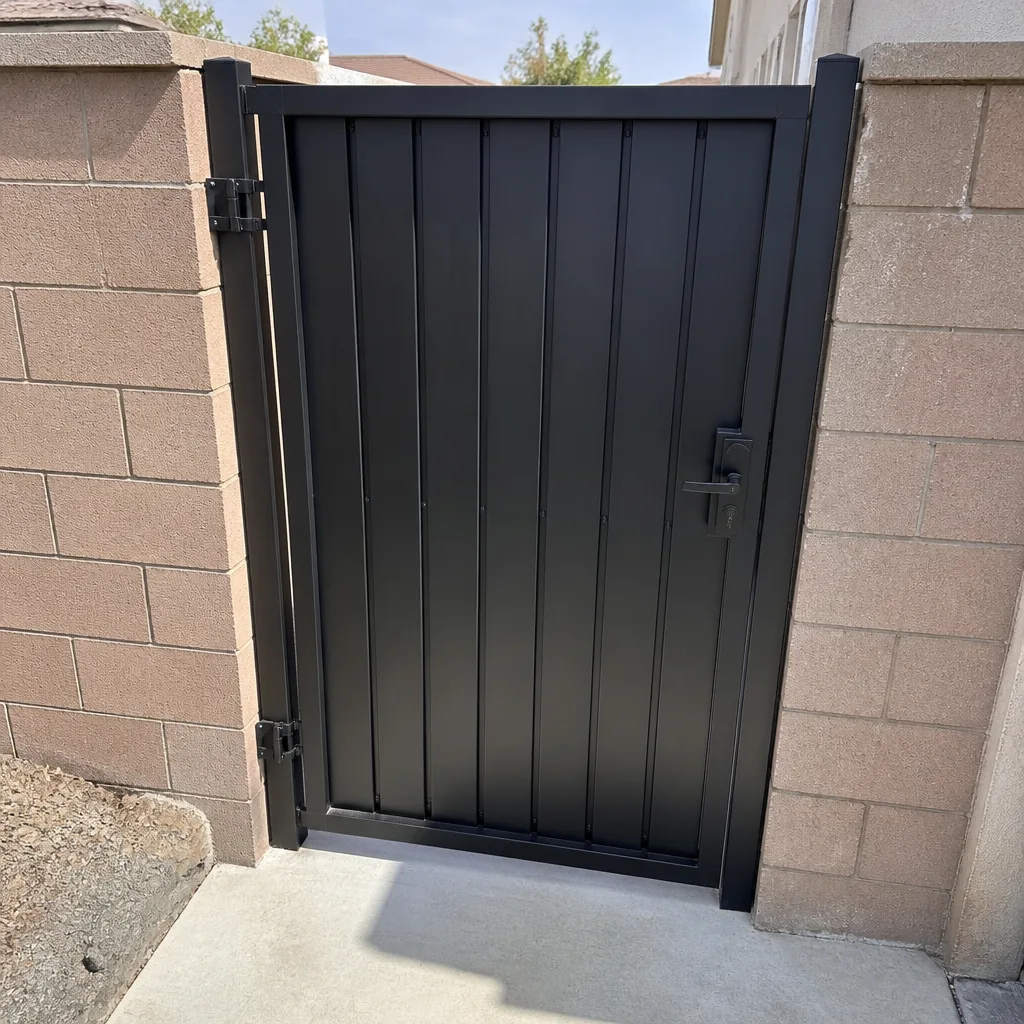
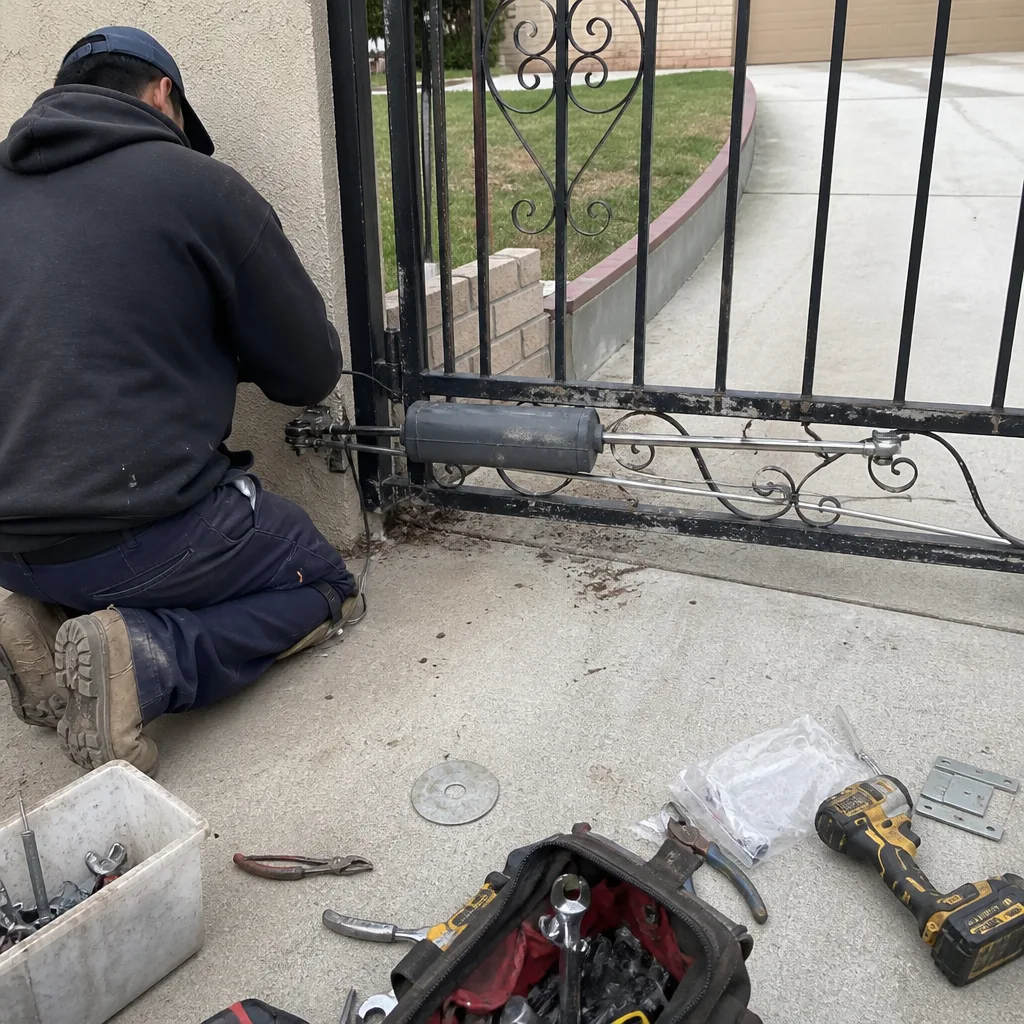
See the difference
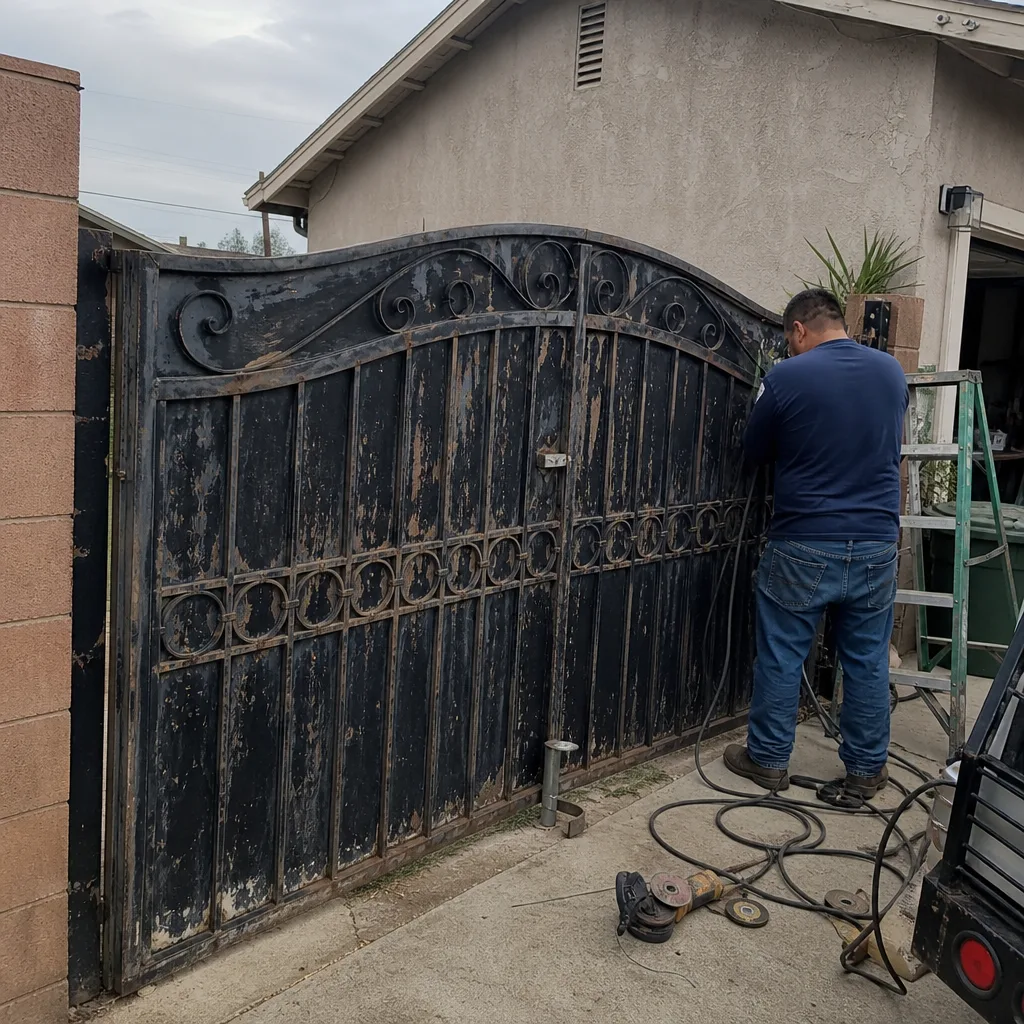 Before
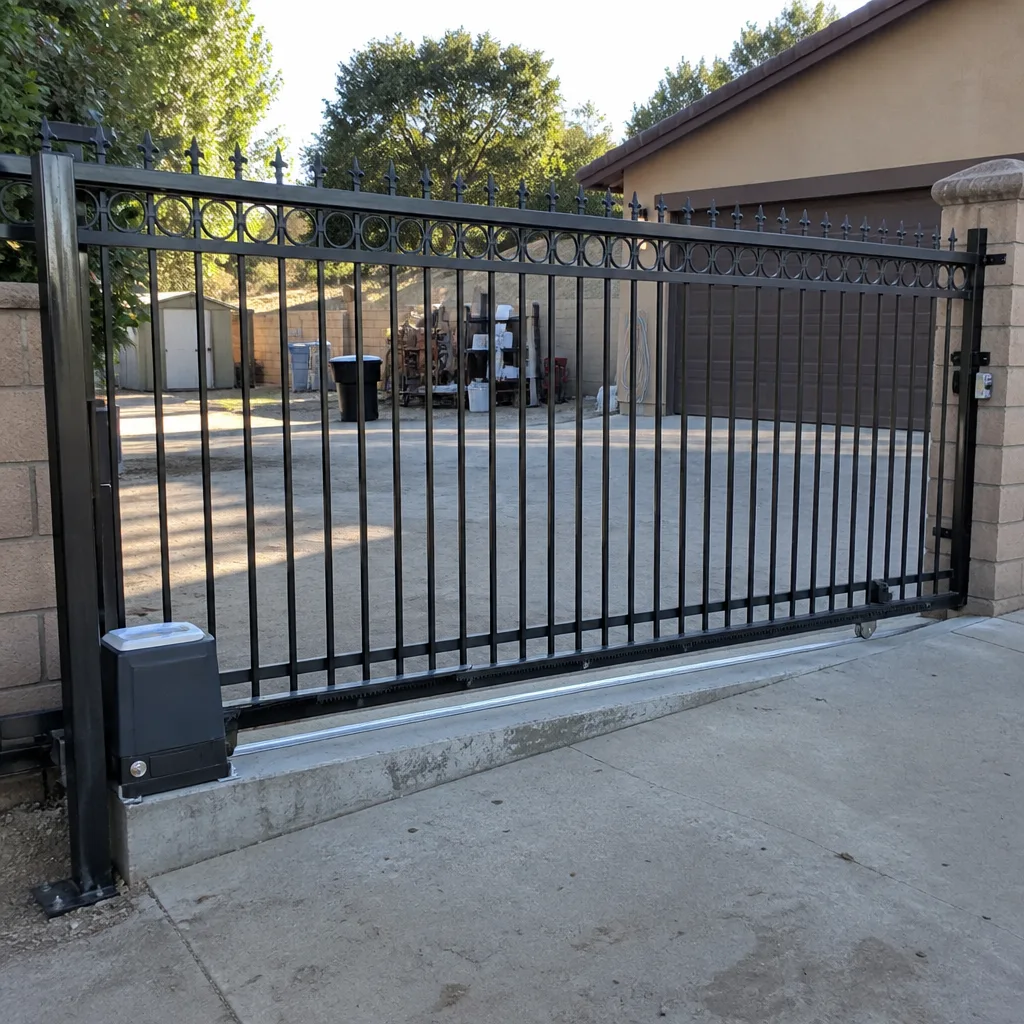 After
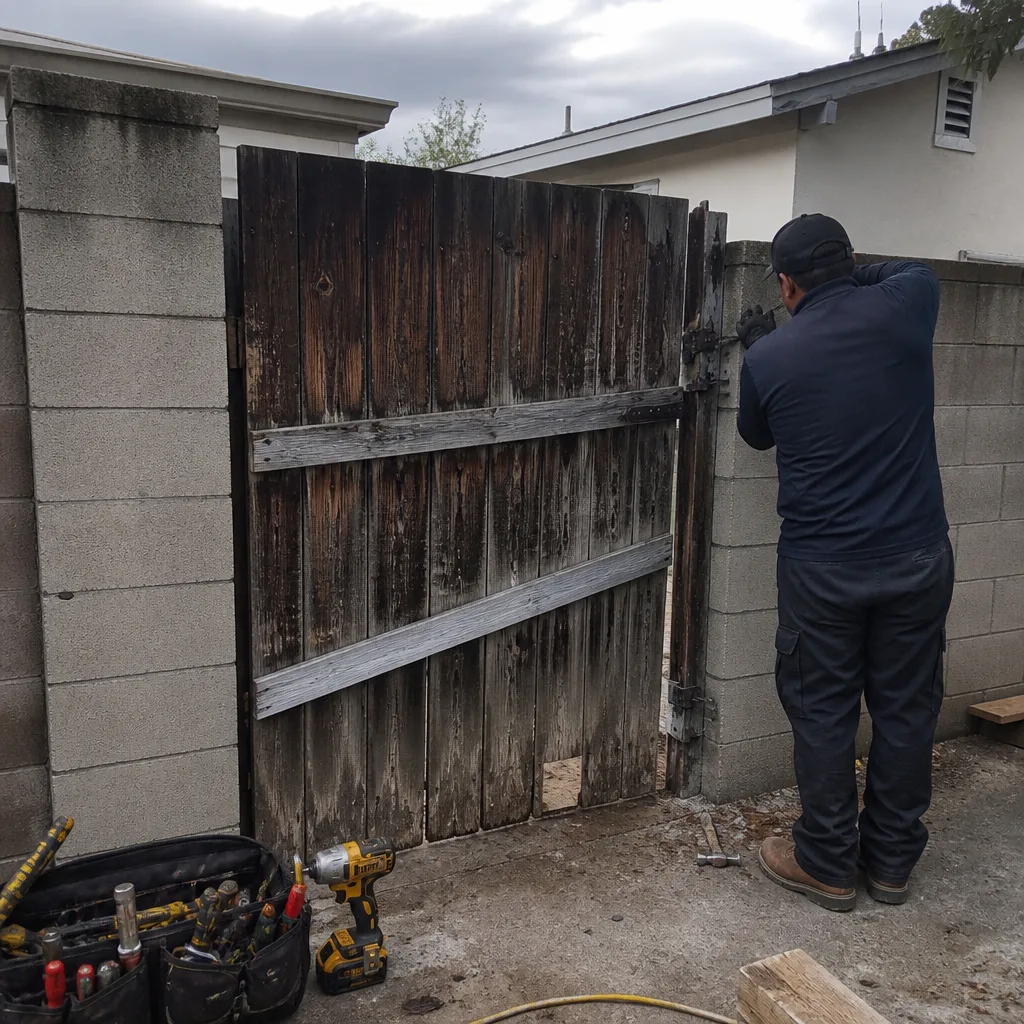 Before
 After
 Before
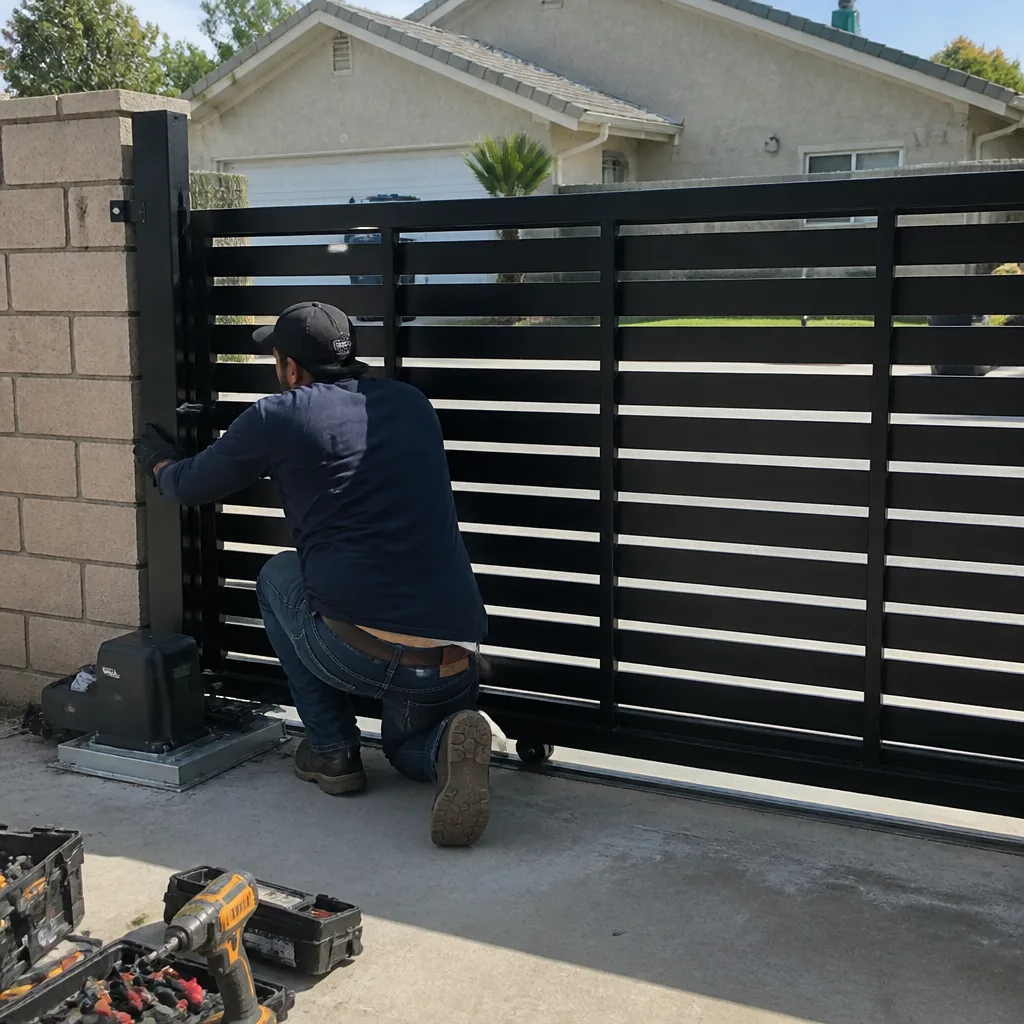 After
When to Call a Professional
High-tension springs, heavy swing panels, and energized control boards are genuinely dangerous components. A gate that weighs 600 pounds under tension can cause serious injury if it releases unexpectedly, and control boards carry live voltage even when the gate is idle. We don’t recommend DIY repairs on operators, springs, or any electrical diagnostic beyond checking a breaker. If your gate is binding, making grinding sounds, intermittently failing, or showing any symptoms from this guide, call before the problem compounds. Gate Repair Jurupa Valley offers free estimates across Jurupa Valley and the surrounding Inland Empire. Call (866) 383-9857 to schedule a diagnostic visit. The estimate is free, and every price is quoted and agreed before any work starts.
Frequently Asked Questions
Gate repair in Jurupa Valley typically runs $180 to $680 for mechanical repairs like hinge replacement, track adjustment, or post realignment, and $300 to $1,200 for electric repairs like control boards, motors, or sensor replacement. The final price is quoted and agreed before any work starts, so you’ll never face a surprise invoice. Call (866) 383-9857 for an exact quote, and the estimate is free.
We offer same-day and next-day service across Jurupa Valley for most repair calls, and we carry common parts on the truck. If your gate won’t open or won’t close, call (866) 383-9857 for a dispatch estimate. For installation and new operator work, we schedule a free measure and provide a written quote before any work begins.
That pattern almost always means heat-related thermal overload. The operator motor or control board is overheating when the housing sits in direct sun through the hottest part of the day. The fix is improved ventilation, shade protection, or relocating the operator housing, not replacing components that are still sound. We see this constantly in Jurupa Valley summer months.
We’re factory-familiar with LiftMaster, FAAC, BFT, Linear, and five other major operator brands across residential and commercial lines. If you’re not sure what brand you have, check the nameplate on the operator housing, or text us a photo and we’ll identify it before the visit.
Sight down the gate line from the hinge end. If the gate hangs lower at the free end or the gap at the latch is uneven top to bottom, the posts have moved. Jurupa Valley’s clay-loam soil expands in winter and contracts in summer, and even a half-inch shift at the post base translates to visible misalignment at the gate edge.
If the gate structure itself is rusted through or twisted, replacement is usually cheaper than continued patching. If the operator is more than 12 years old and has already had a board replacement, start comparing the next three repair projections against new system cost. We’ll give you a straight answer based on your actual system, not a sales script. Call (866) 383-9857 for a free assessment.
The Bottom Line
Gate failures in Jurupa Valley follow predictable patterns. Clay-loam soil shifts posts. Desert heat degrades operators and hydraulic fluid. Wind-blown dust blinds safety sensors. Every repair should address the underlying cause, not just the visible symptom, and proper maintenance should be seasonal and specific to this climate. Document your system now, maintain it on the calendar above, and call a gate specialist when the problem is beyond a breaker check or a sensor cleaning. For more guides & resources on keeping your gate running, visit our blog. If your gate isn’t working right in Jurupa Valley, call (866) 383-9857 for a free estimate from a team that knows your brand before the truck arrives.
Written by the team at Gate Repair Jurupa Valley, serving Jurupa Valley since 2015.